






Solo Dogecoin Mining From Home is More Accessible Than Ever!
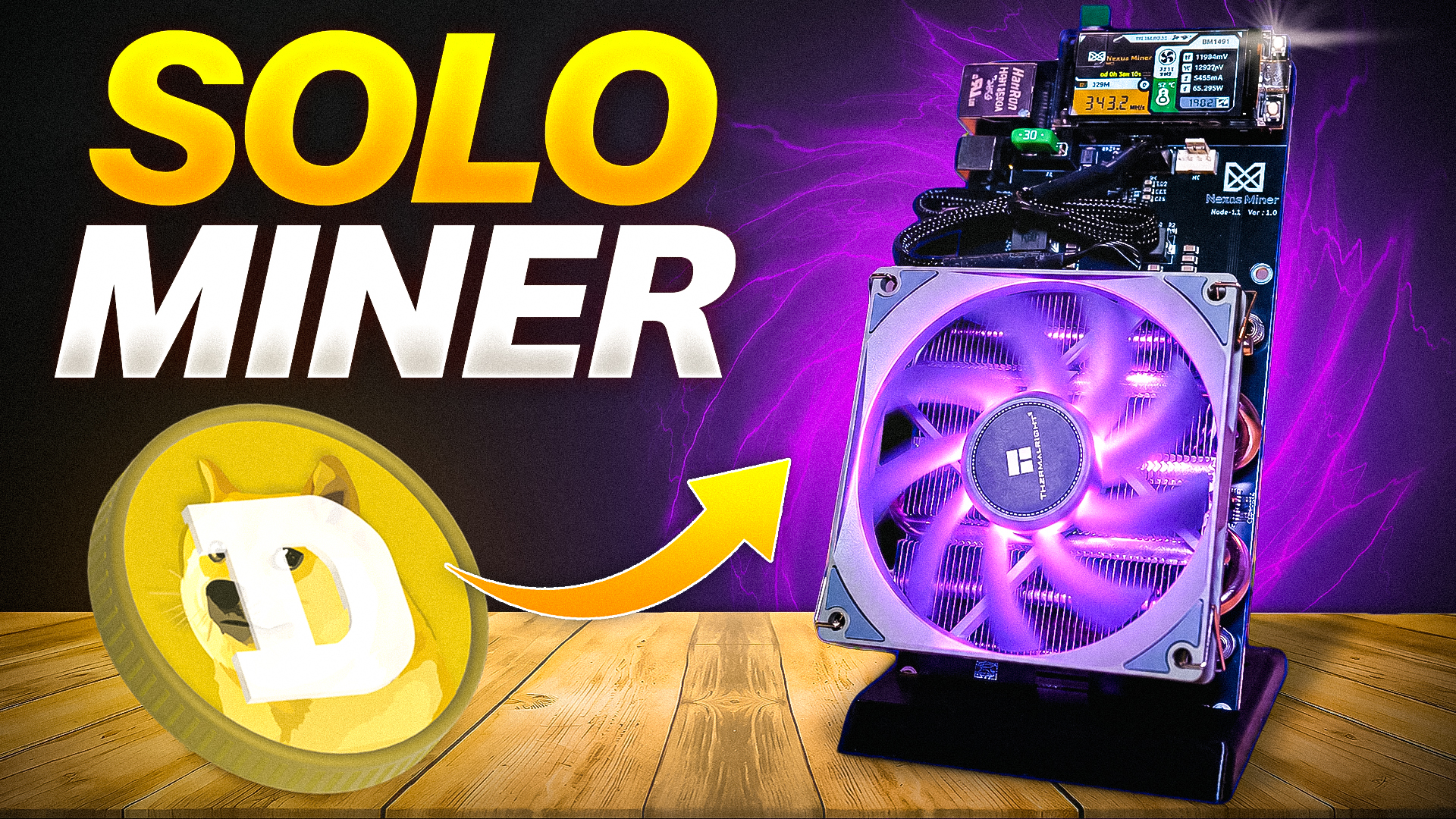
Dogecoin doesn’t get the same attention as Bitcoin in the home mining conversation, but the math behind solo mining it with the right hardware is genuinely interesting and the Nexus Miner L1 makes a strong case for why it deserves a closer look.
At 320 megahash and approximately 70 watts, the L1 is purpose built for one thing: solo mining Scrypt algorithm coins at home. Dogecoin is the primary target, and the block reward odds at this hashrate put it in a category that’s meaningfully different from Bitcoin solo mining. We got early hands on time with a prototype unit ahead of its released, here’s what we found.
Check out the full unboxing and live performance testing here: NEW Solo DOGECOIN Miners could Hit a 10,000 Block!
So What is the Nexus L1?
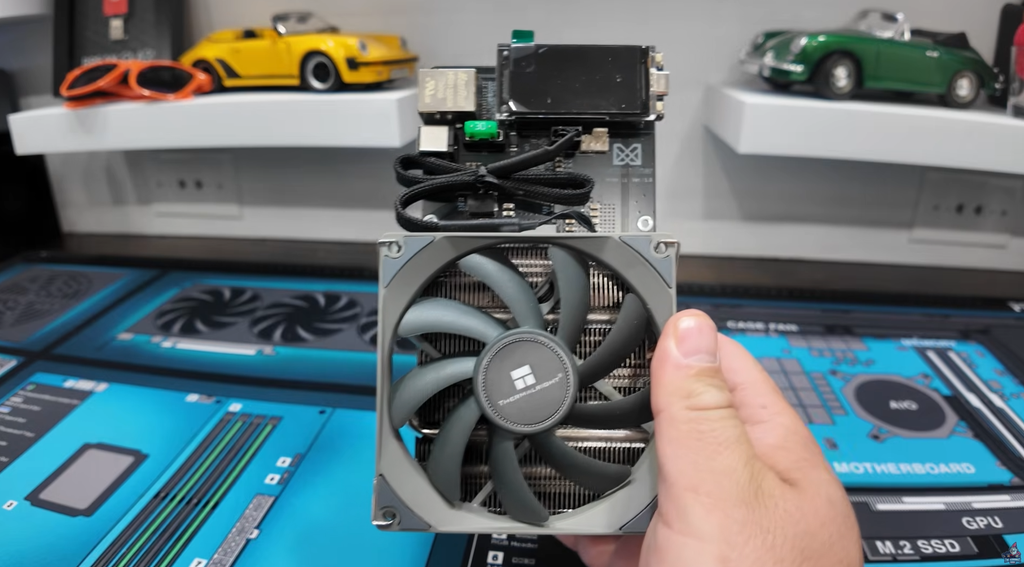
The Nexus L1 is a compact home solo miner running the Scrypt algorithm, making it compatible with Dogecoin, Litecoin, and other Scrypt-based coins. It ships from Helium Deploy at $399.
The hardware spec list is clean and thoughtfully put together:
- Hash rate: 320 megahash (Scrypt)
- Power consumption: 70 watts advertised
- Noise level: 50 dB rated
- Connectivity: Ethernet and Wi-Fi (both supported)
- Cooling: Aluminum heatsink with Thermalright fan
- ASIC chip: BM1491
- Screen: Large front-facing display cycling through live stats
- Power supply: Included (100–240V input, 12V/10A output, 120W max)
- Fan headers: Two — one active, one spare for an optional additional fan
- Fuse: 30A (higher rated than many competing devices)
A few design details stand out immediately, out of the box. The Ethernet port is a genuine differentiator, most home solo miners in this category are Wi-Fi only, and wired connectivity provides lower latency to the pool, which matters in solo mining where every accepted share counts. The 30A fuse is also notable; lower-rated fuses on comparable devices have been a known failure point, so the upgrade here is a meaningful reliability improvement.
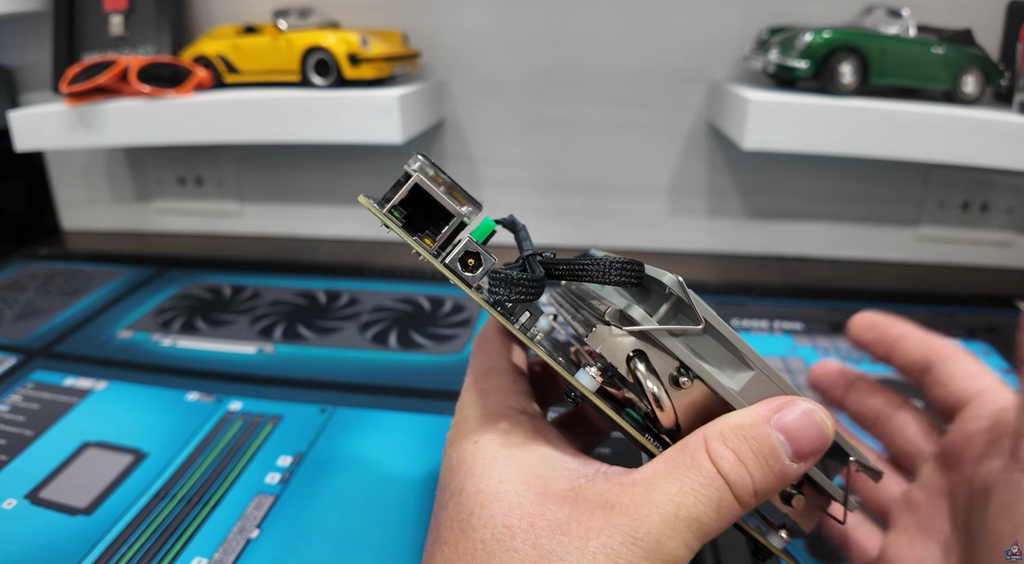
The unit also features a small opening through the chassis that appears to serve an airflow purpose, an unusual design choice that speaks to the attention paid to thermal management on the L1.
Setup and Connectivity
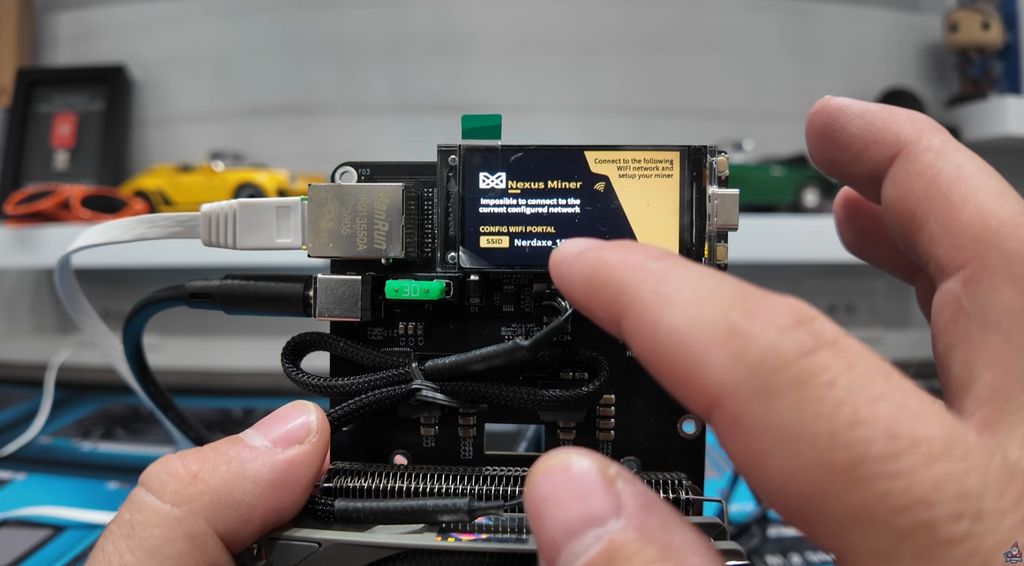
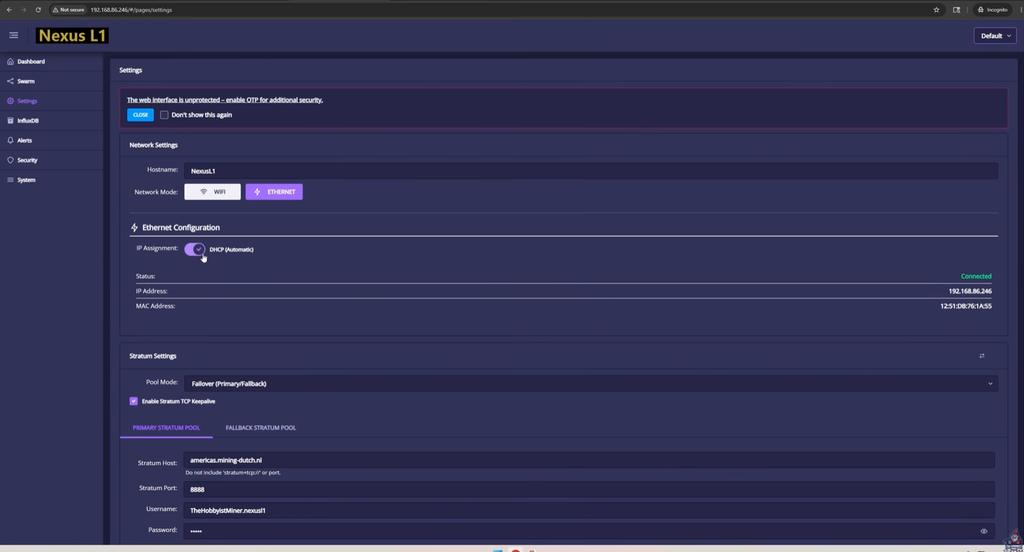
Getting the L1 online has one quirk worth knowing upfront: even with an Ethernet cable plugged in at boot, the unit doesn’t automatically use it. Initial configuration has to happen over Wi-Fi, connect to the miner’s broadcast network, complete setup through the web portal, then toggle to Ethernet mode from within the dashboard. After that switch, the unit reboots onto the wired connection and stays there. Kind of odd honestly.
It’s a minor friction point, and one that will likely be addressed in production firmware. Once connected, the dashboard is clean, informative, and easy to navigate.
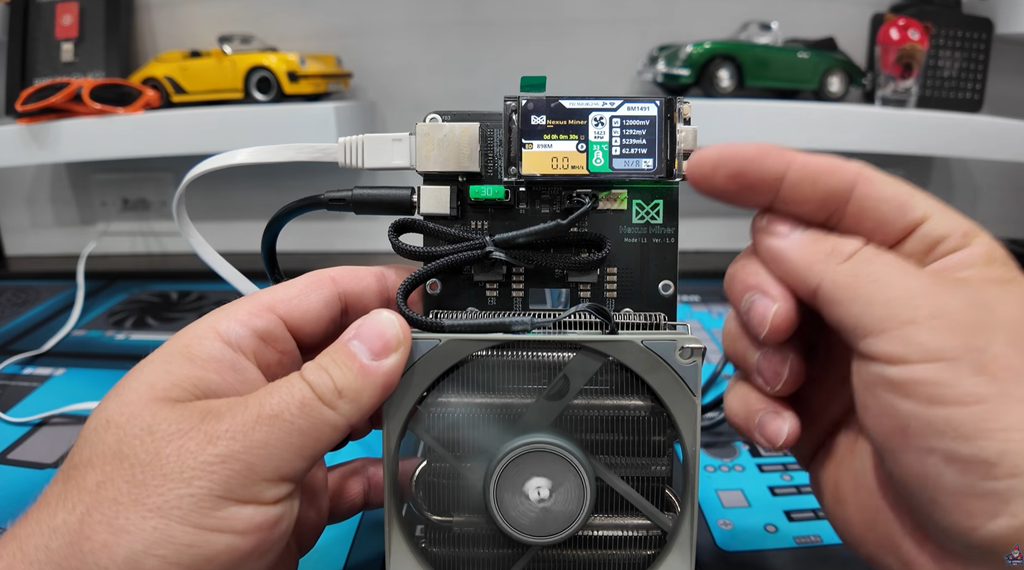
On the pool side, there’s an important note for anyone planning to run this against a home node. During testing, the L1 wouldn’t connect to an Umbrel-based Dogecoin pool running Mining Core, resulting in a 100% rejected share rate across several pool configurations. Mining Dutch ultimately worked reliably for solo Dogecoin mining, and that’s the configuration that delivered the results in this review. Whether this is a prototype firmware issue or something specific to pool compatibility is still being investigated, but it’s worth knowing before assuming any pool will work out of the box.
Dashboard and Software
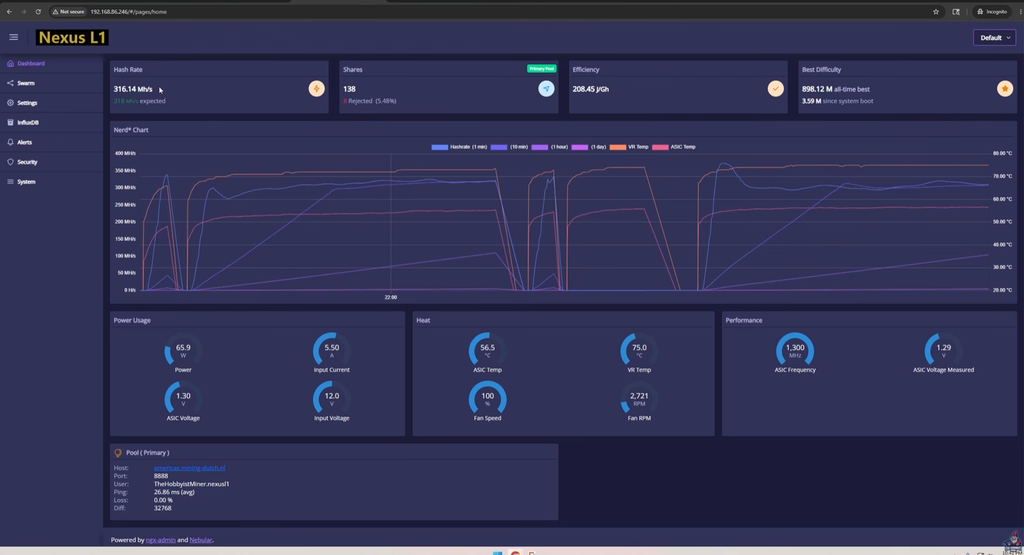
The L1 runs the same Nexus firmware interface seen on the S1, adapted for Scrypt mining. The dashboard displays hashrate, accepted and rejected shares, pool status, uptime, frequency, voltage, and fan speed, all on a clean dark-mode UI with boatloads of real-time information.
Notable software features include:
- Swarm mechanic — automatically discovers and displays other compatible miners on the local network, making fleet visibility easy without a separate app
- Ethernet/Wi-Fi toggle — selectable from within settings with a color-coded status indicator
- Static IP or DHCP selection for wired connections
- Fan control — automatic or manual, defaulting to auto from factory
- Frequency and core voltage settings accessible for manual adjustment
- Firmware update — available directly from the dashboard, a feature the S1 prototype lacked at launch
- Discord webhook alerts — configurable notifications for mining events, consistent with the alert system on the S1
- InfluxDB integration for data logging
- System controls — restart and shutdown available from the dashboard
The front screen on the physical unit cycles through multiple information panels, pool status, global stats, frequency and voltage readings, navigable via a button on the unit. It’s a genuinely useful at-a-glance feature for anyone running the L1 on a desk or shelf without always having a browser open.
Performance Testing: HashRate, Watts, Noise, and Thermals
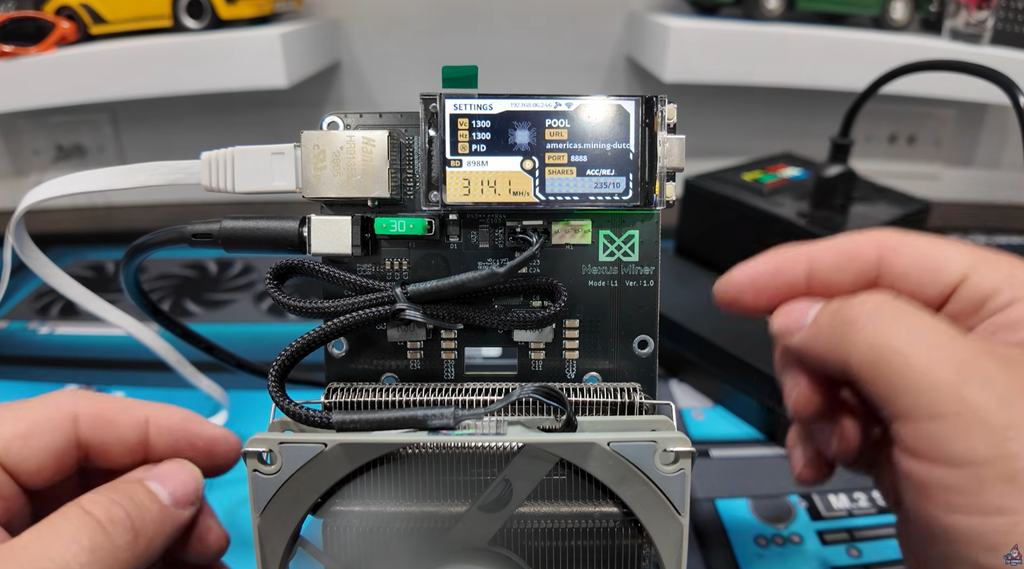
After approximately 33 minutes of runtime, the L1 was consistently delivering 316–323 megahash, with the average sitting right at the advertised 320 megahash spec. The unit climbed steadily rather than spiking immediately, a different ramp behavior than the S1, which hit full speed in under two minutes. Peak observed was 323 megahash, slightly above spec.
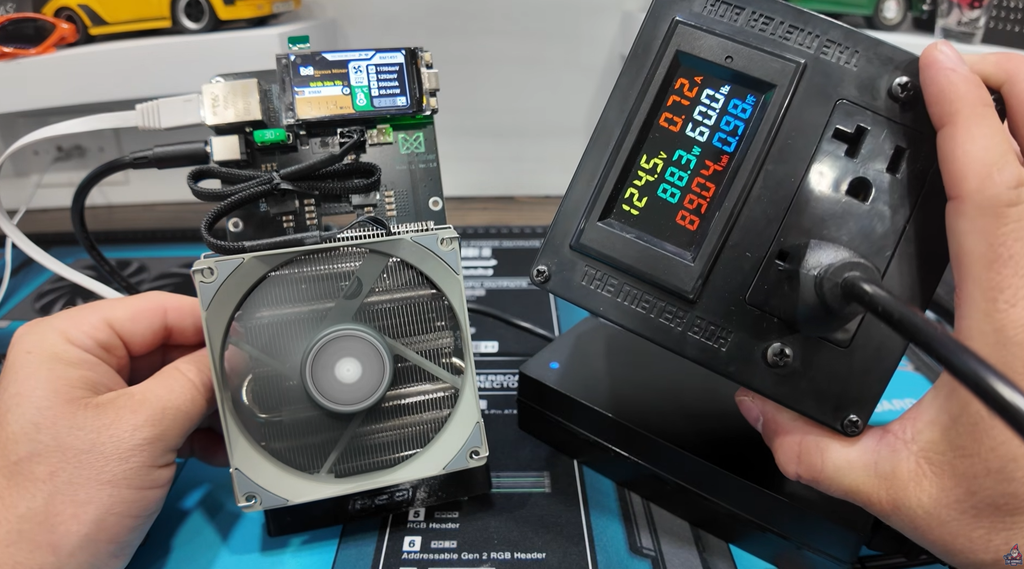
Measured at the wall: 88.3 watts at 124V. That’s approximately 26% above the advertised 70 watts, a meaningful gap, though not as dramatic as the S1’s deviation. The included power supply runs warm under load, and the bottom of the brick gets notably hot during extended operation. Running it on a hard, flat surface with clearance underneath is advisable; carpet or enclosed spaces that trap heat beneath the power supply are worth avoiding.
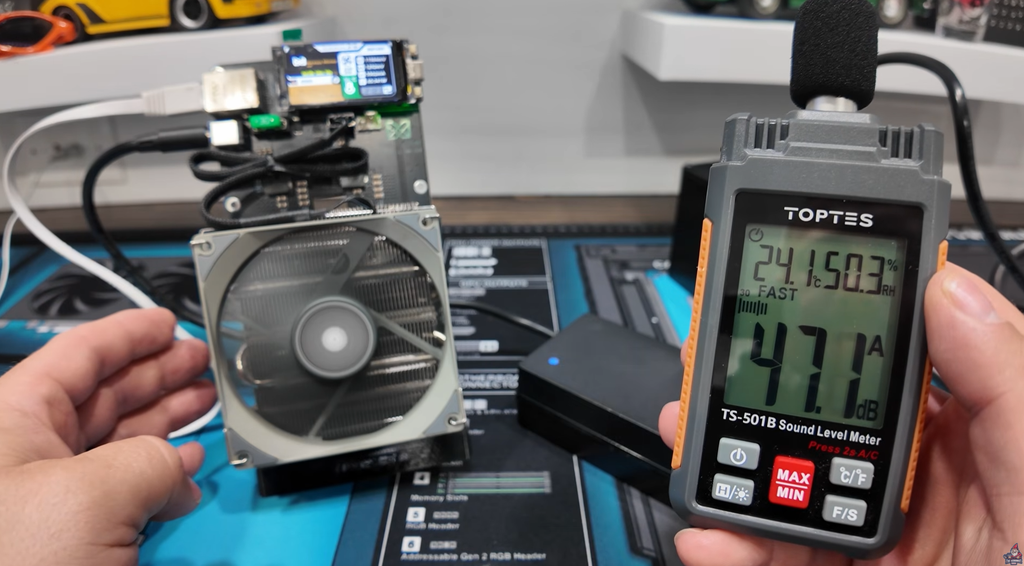
At the measurement point, the L1 came in at 47 dB, actually quieter than the manufacturer’s listed 50 dB rating. The Thermalright fan runs smoothly and quietly, consistent with its reputation across other home miner applications. Bedroom or office use is practical at this noise level.
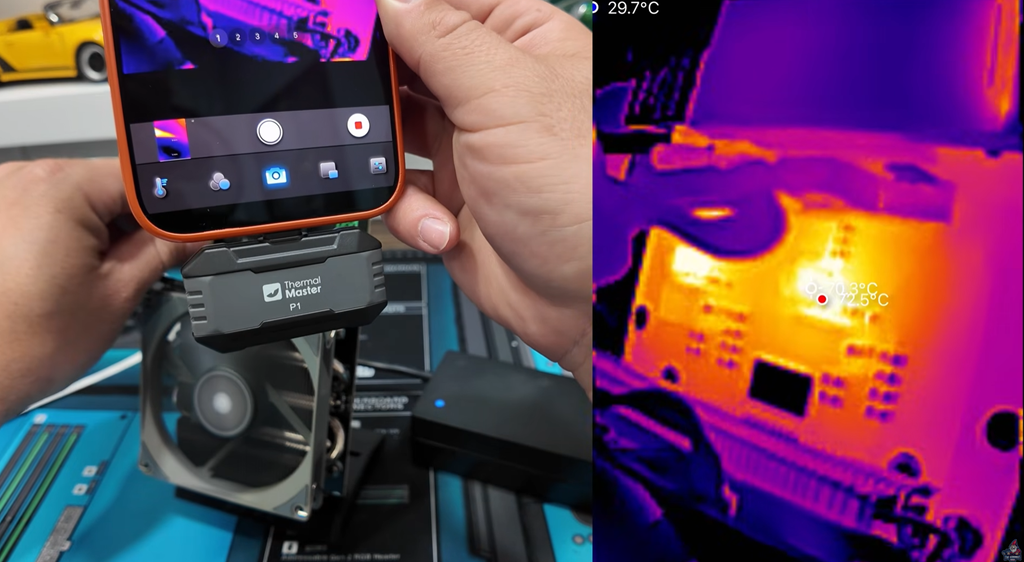
Thermal camera readings during operation showed the hottest points concentrated at the top of the unit, reaching approximately 70–72°C at the heatsink center. The back of the board around the chip measured around 53°C, and side panels came in at 62–64°C. By comparison, the Nexus S1 ran warmer, the L1’s thermal profile is more conservative, which makes sense given the lower absolute power draw. No thermal concerns at stock settings.
The Solo Mining Odds: Why Dogecoin Makes Sense
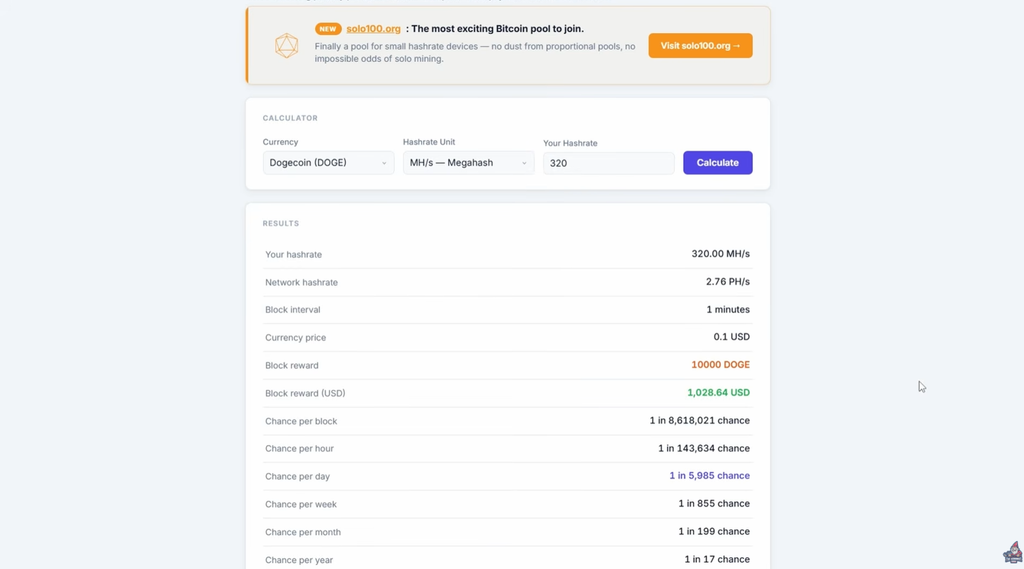
This is where the Nexus L1 makes its most compelling argument.
Dogecoin blocks are found approximately every one minute, one of the fastest block intervals of any major proof-of-work coin. Each block reward is 10,000 DOGE, which at current prices translates to roughly $1,000 per block.
At 320 megahash pointed at the Dogecoin network, the estimated odds of finding a block in a given year are approximately 1 in 17. That’s a meaningful probability for a home solo miner, substantially better than the 1-in-1,710 annual odds for Bitcoin at 10 terahash, even accounting for the lower reward value per block.
For context: if you ran the L1 continuously for a year, statistical expectation would put you at roughly a 1-in-17 chance of hitting a $1,000 payout at some point during that period. Some will hit sooner, some later, some not at all, solo mining is inherently probabilistic. But the math here is more favorable for regular reward events than almost any other coin accessible to home solo mining hardware.
Pool mining Dogecoin with this device is technically possible but defeats the purpose of the hardware. The L1 is designed and optimized for solo mining, and the block odds at this hashrate support that use case clearly.
Pricing and Availability
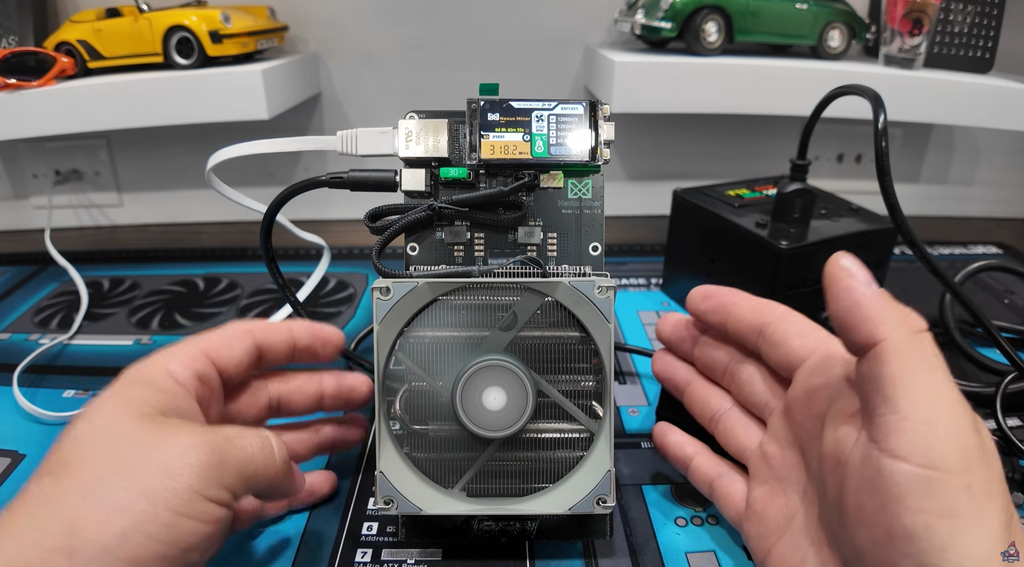
The Nexus L1 is available through Helium Deploy at $399. A $25 discount brings the price to $374 at checkout using code “NEXUS”.
If the L1 Scrypt miner interests you, the Nexus S1 , covered in a separate review, is the Bitcoin-focused sibling running BM1373 chips at 10 terahash. Both are available through Helium Deploy and worth comparing depending on which coin you want to target.
Final Thoughts
The Nexus L1 is a well-built, thoughtfully designed home Dogecoin solo miner with a few genuine differentiators, Ethernet connectivity, a 30A fuse, a quality fan, and block odds that make solo mining feel like a realistic proposition rather than a lottery with near-impossible odds.
The power draw running above spec and the pool compatibility quirks are real considerations, and both are likely to be refined before or shortly after the production release. As a prototype, the hardware itself is already performing at or above its advertised hash rate, which is the most important baseline.
At $399 or $374 with the discount, the L1 is competitively priced for what it delivers, and the 1-in-17 annual odds of a Dogecoin block make it one of the more mathematically interesting home solo mining purchases available right now.
See You Next Time!
Already running a home solo miner or thinking about picking one up? Come share your experience in The Hobbyist Miner Community Discord — free to join here!