






Are Cell Phones the Best Kept Hardware Secret No One Is Talking About?
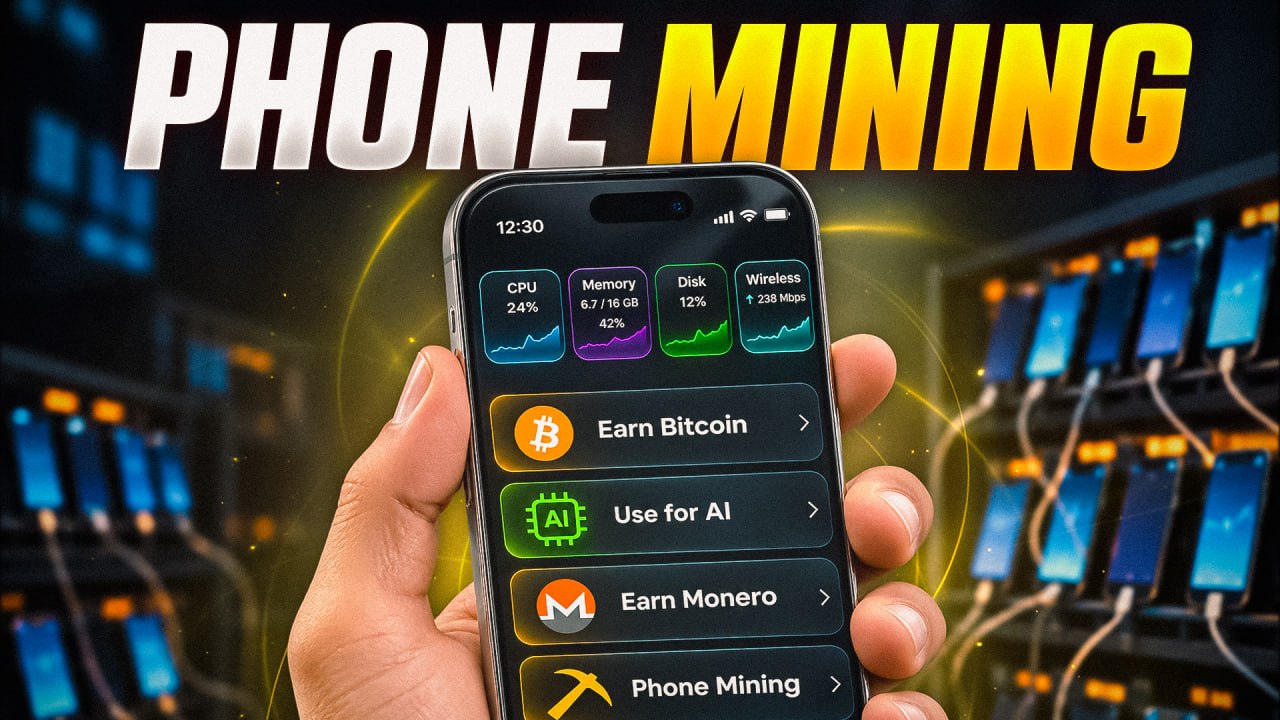
When we talk about generating revenue from hardware, most of us immediately think about ASIC miners, graphics cards, or even dedicated AI servers. But what if one of the most overlooked pieces of hardware is something we’ve been carrying around in our pockets for years?
Cell phones.
With rising hardware costs, increasing electricity rates, and growing demand for artificial intelligence and decentralized computing, I believe cell phones deserve a much closer look.
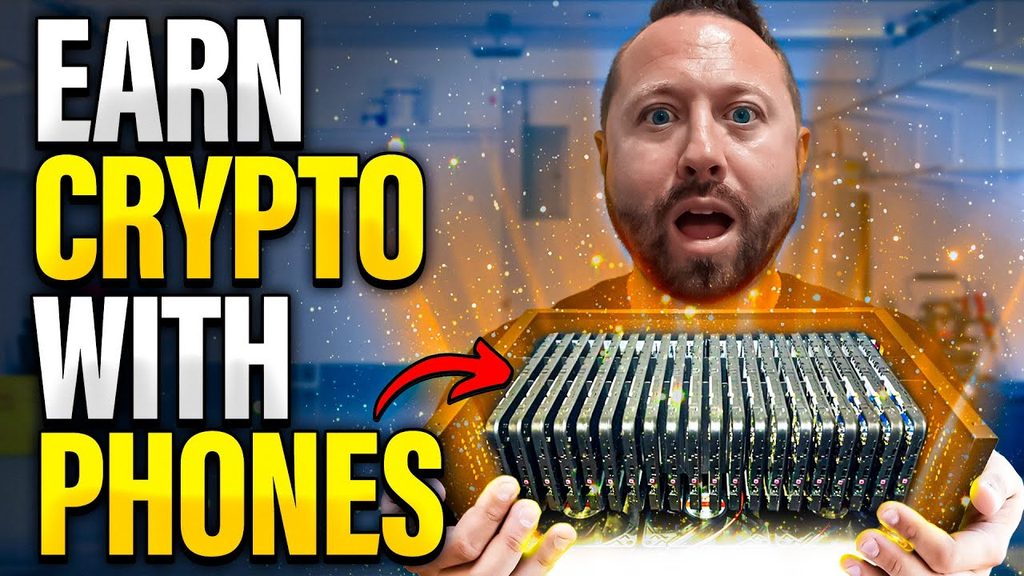
I recently sat down with Luke from CellHasher on The Everyday Miner Podcast to discuss the evolution of cell phone mining, his personal operation of over 3,000 cell phones, and how these devices are finding applications far beyond cryptocurrency mining.
What I took away from our conversation is that we may be dramatically underestimating what these little devices are capable of.
Checkout the entire interview with Luke here
From 100 Cell Phones to Over 3,000
Luke’s journey into cell phone mining began around 2020–2021. Like many home crypto miners, he was looking for alternative ways to generate revenue from hardware without the burden of a massive electricity bill.
Rather than purchasing another GPU or ASIC miner, Luke went on eBay and purchased 100 cell phones.
What followed was approximately three months of experimentation, troubleshooting, hardware modifications, and software configuration. He eventually figured out how to operate compatible phones without their batteries and screens, creating a more compact computing solution.
Luke recalls purchasing some of his original phones for approximately $20 each, with his first 20 operational devices generating somewhere around $2–$3 per day mining Verus Coin at the time.
As his operation generated revenue, he reinvested into additional hardware rather than immediately cashing out.
Fast-forward to 2026, and Luke now operates more than 3,000 cell phones at his home alone.
His experimentation eventually evolved into CellHasher, a company providing dedicated hardware solutions for individuals and businesses looking to operate cell phone farms.
According to Luke, CellHasher has shipped nearly 30,000 phones over four years, with an estimated 100,000 phones accommodated by its hardware solutions, including DIY installations.
Clearly, there is a growing community that sees potential in this hardware.
What is a CellHasher phone server, learn more.
Why Cell Phones Are So Attractive for Home Miners
One of the biggest challenges I constantly hear about from my community is electricity costs.
Not everyone has access to inexpensive residential electricity, dedicated 240V circuits, large mining sheds, or commercial hosting facilities.
Cell phones present an entirely different opportunity.
Many smartphones contain surprisingly capable hardware, including:
- Eight-core processors
- Energy-efficient ARM-based chipsets
- Dedicated graphics processors
- Several gigabytes of onboard memory
- Built-in storage and networking capabilities
- Neural processing units (NPUs) on select models
- Low power consumption under suitable workloads
Processors such as Qualcomm’s Snapdragon series were specifically designed to deliver meaningful performance while maintaining battery efficiency.
For home miners, that engineering translates into an interesting opportunity: accessing computing power without necessarily introducing the substantial heat, noise, and electrical demands associated with traditional mining hardware.
A single cell phone might not generate enough revenue to get you excited. But what happens when you have 20, 100, or even 500 of them?
That is where things start to become interesting.
The opportunity isn’t necessarily in the individual device. It’s in the collective computing power and economics of operating these devices at scale.
How Much Money Can You Make With a Cell Phone Farm?
This was one of the most interesting parts of my conversation with Luke.
During our interview, he shared several figures from his own operation.
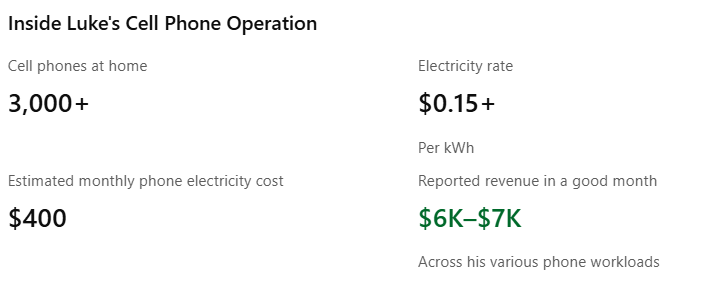
What makes Luke’s approach particularly interesting is that he isn’t relying exclusively on a single cryptocurrency or project.
Instead, he distributes his computing resources across multiple revenue-generating opportunities, including Acurast, Verus Coin mining, Monero mining, and even hosting his own online gaming platform.
His gaming platform alone reportedly generates approximately $500 in recurring monthly revenue.
This is an important distinction. Luke isn’t simply operating thousands of cryptocurrency miners. He’s operating a collection of general-purpose computing devices that can be repurposed as opportunities arise.
Of course, anyone considering a similar operation needs to account for hardware acquisition, supporting infrastructure, maintenance, electricity, depreciation, and fluctuating cryptocurrency rewards.
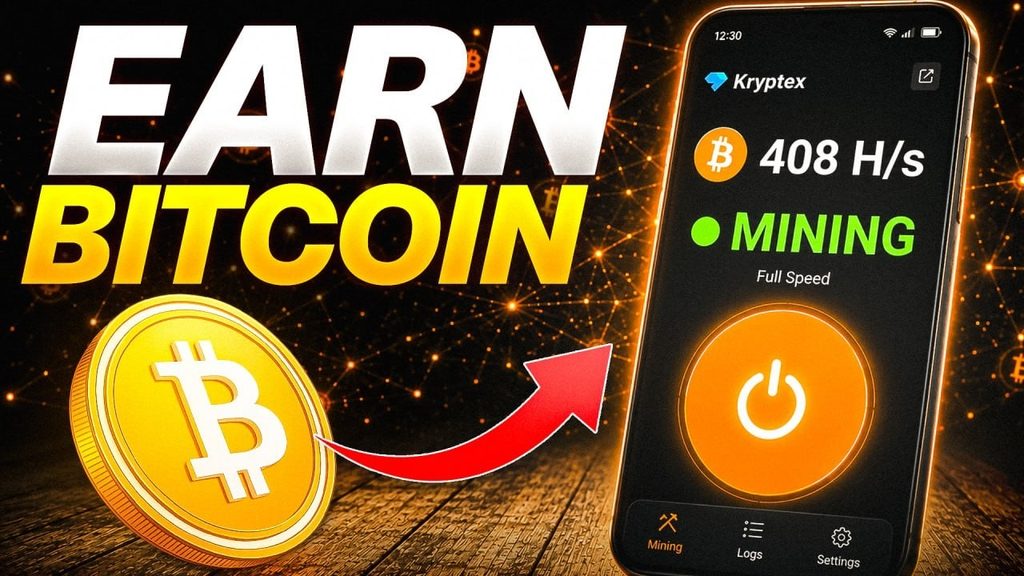
A great way to get started with phones is by testing the waters with mining Monero and getting paid out in Bitcoin.
Cell Phone Mining and DePIN: Diversifying Your Revenue
One of my favorite aspects of cell phone hardware is its versatility.
When I purchase a Bitcoin ASIC miner, that machine is fundamentally designed to perform a specific hashing algorithm. If mining becomes unprofitable, my alternative uses for that hardware are relatively limited.
Cell phones are different.
Here are several opportunities discussed during our conversation:
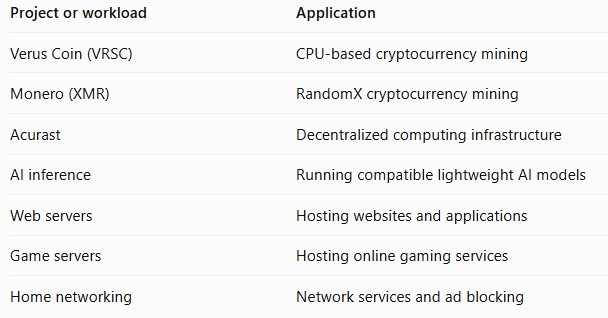
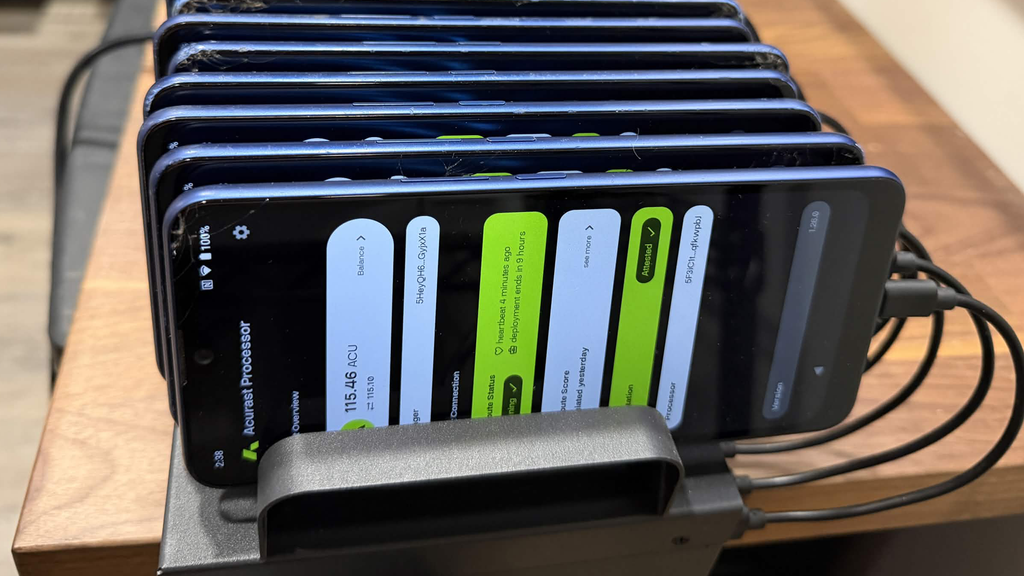
Luke currently utilizes Acurast Lite on devices while allocating available CPU resources toward cryptocurrency mining.
This allows him to pursue multiple revenue streams on compatible hardware, provided the workloads don’t interfere with one another or violate project requirements.
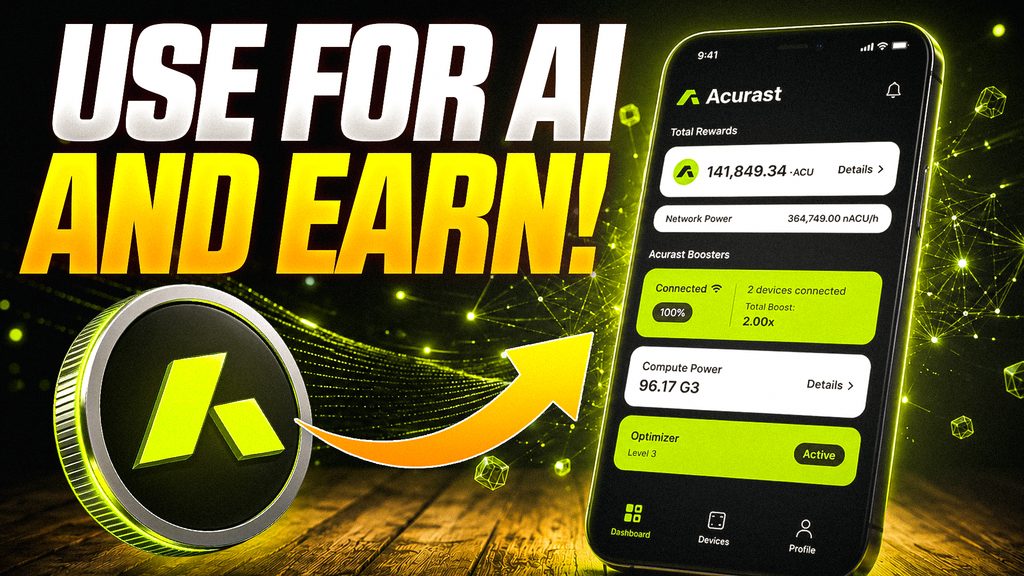
For those unfamiliar with Acurast, it is a decentralized computing project that enables compatible mobile devices to contribute computing resources to a distributed network.
For individuals who prefer a more hands-off experience, Luke also discussed Acurast Core as an alternative to managing multiple workloads manually.
I personally refer to this simpler approach as lazy mining. Sometimes, I just want to configure a device, plug it in, and let it do its thing.
It’s encouraging to see opportunities emerging for both technically experienced enthusiasts and everyday home miners.
Could Cell Phones Be the Next Big Thing in AI Computing?
Artificial intelligence may ultimately become one of the most interesting applications for repurposed smartphones.
When we think about AI infrastructure, we naturally picture massive data centers filled with expensive NVIDIA GPUs.
However, not every AI workload requires that level of computing power.
Luke explained how some modern smartphones contain neural processing units, or NPUs, specifically designed to accelerate artificial intelligence workloads.
While accessing these components can be complicated by manufacturer firmware and software restrictions, the potential is intriguing.
Rather than attempting to run one massive AI model across an individual cell phone, imagine operating hundreds of smaller, specialized AI agents across a collection of devices.
One group of phones could handle Python programming tasks. Another could handle data processing. Others could assist with writing, automation, or specialized application workflows.
A centralized management system could distribute compatible tasks throughout the network.
Luke even described an experiment involving a high-end RedMagic smartphone equipped with 16GB of RAM, which he reported was capable of running a 30-billion-parameter AI model.
While the precise model configuration and benchmark weren’t independently established during our interview, it provides an interesting example of what enthusiasts are experimenting with.
Are cell phones going to replace high-end AI GPUs? I don’t believe so.
But could they complement traditional GPU infrastructure by handling smaller, independent workloads?
Absolutely, and that’s an opportunity worth exploring.
Even Google Is Exploring Cell Phone Computing
Perhaps the most surprising revelation during my interview was Luke’s discussion of Google’s interest in repurposed smartphone computing.
According to Luke, Google funded a research initiative involving the University of Southern California that explored utilizing recycled computing hardware for applications such as grading software and other smaller computational tasks.
Luke also shared that CellHasher was involved in an ongoing initiative involving approximately 2,000 Google Pixel phones, with custom-designed chassis capable of accommodating around 60 phones each.
These claims come directly from Luke’s interview and have not been independently verified.
Nevertheless, the concept makes a tremendous amount of sense.
Why allocate expensive, high-performance computing hardware toward smaller workloads when existing, energy-efficient devices could potentially accomplish the same tasks?
There is also an environmental opportunity here. Extending the useful life of retired smartphones could reduce electronic waste while creating additional value from hardware that has already been manufactured.
Your old cell phone might no longer be desirable as a daily driver, but that doesn’t necessarily mean its computing hardware has reached the end of its useful life.
Hundreds of Cell Phones or One High-End GPU?
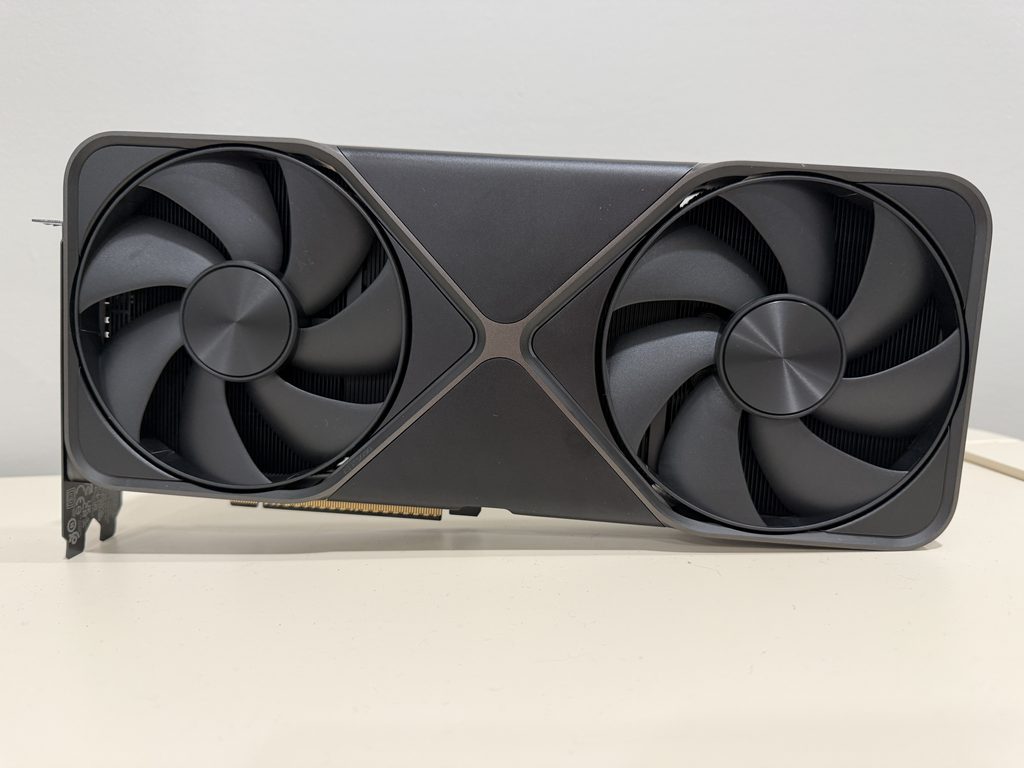
During our conversation, I brought up the example of one of my NVIDIA RTX 5090 graphics cards, which I had listed on eBay for $11,000 at the time of our interview.
Luke estimated that a budget of that size could potentially purchase a setup consisting of 200–400 cell phones, depending on the models and configuration.
That comparison certainly gets you thinking.
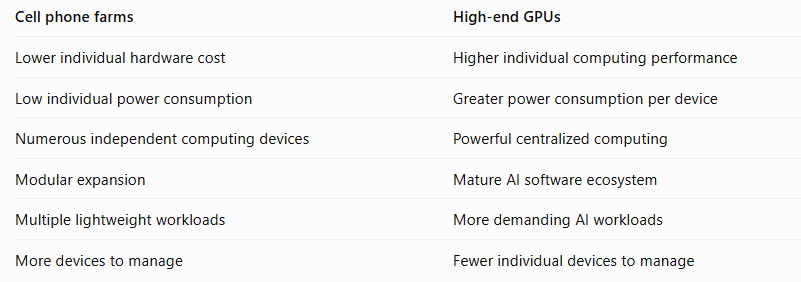
These aren’t directly interchangeable technologies. Hundreds of phones do not automatically deliver the same performance as a high-end GPU, and their individual memory capacities cannot simply be combined into GPU-equivalent memory.
However, depending on the workload, having hundreds of independent computing devices could present advantages that a single powerful device cannot provide.
It all comes down to what you’re trying to accomplish.
The Risks of Cell Phone Farming
As excited as I am about this space, there are certainly challenges that shouldn’t be overlooked.
Not every cell phone is suitable for continuous operation. Some devices have restrictive firmware, limited software compatibility, or difficulties automatically restarting after power outages.
Battery safety, cooling, appropriate power delivery, and reliable networking also become increasingly important as your operation grows.
There is also no guarantee that today’s profitable cryptocurrency or decentralized computing project will remain profitable tomorrow.
Luke discussed an experience involving the Midnight Network’s NIGHT token, where rewards that initially carried a significant paper value were exposed to price declines during token lockup periods.
It’s a great reminder that potential earnings and realized profits are two very different things.
My recommendation is to start small, measure your actual earnings and electricity consumption, and familiarize yourself with the hardware before committing thousands of dollars. I tried this out by taking some of my old phones and mining Monero on them and getting paid out in Bitcoin.
Are Cell Phones Right for You?
If you’re someone who previously enjoyed building GPU mining rigs, experimenting with Linux, configuring cryptocurrency miners, or operating a home lab, cell phone computing could be right up your alley.
For individuals who don’t enjoy troubleshooting, preconfigured solutions and dedicated charging stations may provide a more approachable starting point.
You don’t need to start with 100 phones like Luke did.
Start with a handful of compatible devices. Experiment with different projects. Track your results. Determine whether the opportunity makes financial sense for your situation before scaling.
One of the greatest advantages of this hardware is that you can expand gradually.
The Hardware Hiding in Plain Sight
I’ve spent years exploring different ways to generate revenue with computer hardware, from GPU mining and ASIC mining to decentralized infrastructure and artificial intelligence.
What excites me about cell phones isn’t necessarily what they’re earning today. It’s what they could be doing tomorrow.
We have an enormous amount of existing mobile hardware that was designed from the ground up to be powerful, compact, and energy-efficient.
Combine that with emerging decentralized computing networks, cryptocurrency mining opportunities, AI agents, and home server applications, and suddenly that outdated cell phone sitting in your desk drawer starts to look a little different.
I don’t believe cell phones are going to replace ASIC miners or GPUs. Instead, I believe they could become another meaningful category of hardware within a diversified home computing operation.
Are cell phones the best kept hardware secret no one is talking about?
After my conversation with Luke from CellHasher, I certainly think they deserve more attention.
To learn more, check out my full sit-down interview with Luke from CellHasher on The Everyday Miner Podcast, where we explore his personal phone farm, cryptocurrency mining strategies, AI computing, and the future of repurposed mobile hardware.