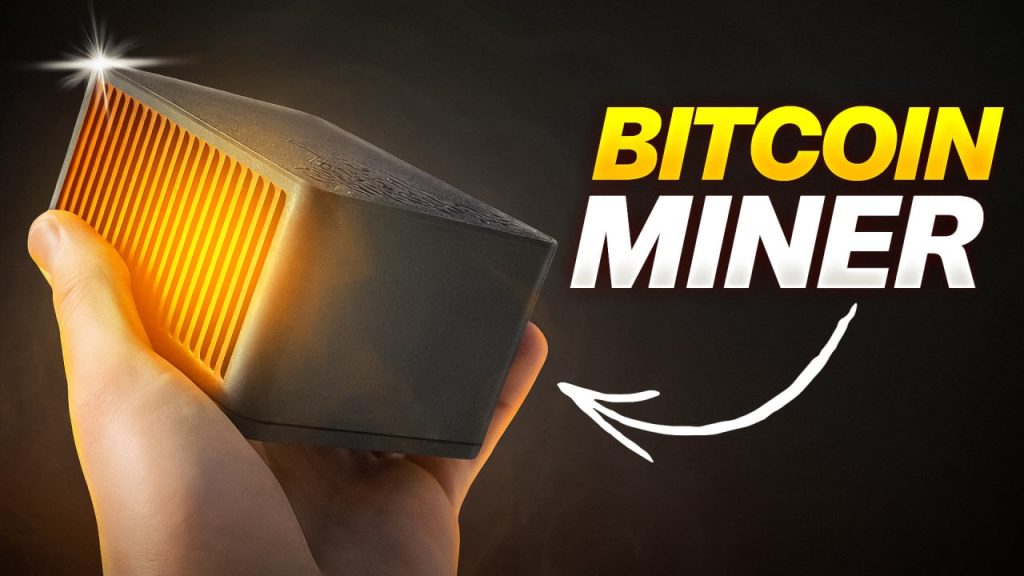







Giving New Life to Older Bitcoin Miners in 2026!

Every miner knows the ones I’m talking about. They live in the garage, the basement, or the back corner of the shed, under a fine layer of dust. They aren’t worth running and they aren’t really worth selling. They’re just there, taking up space and reminding you of the day they were worth a lot more than they are now.
I call them Shelf Gnomes.
A few months ago I walked my own shed property and took an honest inventory of my Shelf Gnomes. I found a pile of them, and it wasn’t a pretty picture. This article covers how I ended up with so many, what I learned, and what I’m doing to put them back to work instead of leaving them as expensive paperweights.
Watch a full video on this topic found here
What Exactly Is a Shelf Gnome

A Shelf Gnome is a miner that has fallen into the gray zone between “still profitable” and “scrap metal.” At home electric rates, powering it on loses money or barely breaks even. On the used market, buyers are offering a fraction of what you paid, if they’re offering anything at all.
So it sits, on a shelf, collecting dust.
When I did my walkthrough, I found a real mixed bag:
- Bitmain Antminer L7s, the Scrypt workhorses that have unfortunately come to the end of their journey, or close to it.
- Bitmain Antminer S19 J Pro+ (117 TH/s), a unit I really should have sold forever ago! Like last bull run!
- Bitmain Antminer S19K Pro (120 TH/s), last bull runs wild card, is now several years later, a paperweight.
- Canaan Avalon A1566 and A1346, Bitcoin miners
- A MicroBT Whatsminer M60, the only Whatsminer I have ever own. Always considering getting another, a work horse!
- Four Kaspa IceRiver KS5Ls, the 12 TH/s models. These are the last of my Kaspa miners, and I’m going to be lucky to get around $150 apiece for the ones I sell.
- An IceRiver AL3, a Alephium miner that’s almost painful to look at. I don’t think I could get $50 for it right now.
Some of these I’ve fully ROI’d, meaning they paid for themselves and then some, and I’m just riding out whatever life they have left. Others were straight-up losses. That’s the reality of crypto mining, and I’d rather be honest about it than pretend every machine in my fleet is a winner.
How I ended up with a shed full of them

Here’s the part that stings, because it’s a lesson I preach constantly on my channel.
Hardware arbitrage, is the practice of selling your miners when they’re worth the most, not when they’ve bottomed out. Miner prices swing wildly with the market. A unit that’s a screaming buy one quarter can be a liability the next. If you buy a hot new miner today, whether that’s a Z15 Pro or a new-generation Bitcoin ASIC, there’s a real chance it’s worth dramatically more, or dramatically less, in a few months. When the price is high, sell it. Take the profit and move on.
Do I follow my own advice? Not always. That’s the confession.
I got greedy. I wanted to ride the profits a little longer, which is human nature. The market is hot, the machine is printing, and you tell yourself you’ll sell next month. But “a little longer” has a way of turning into a shed full of miners you should have flipped months ago. That’s how the Shelf Gnome army grows.
If you take one thing from this article, take this: don’t fall in love with your miners. They’re tools. When a tool is at peak value, cash it in. If you’d like a rule of thumb, decide on your exit before you buy. Know what price or profitability level will trigger a sale, and write it down. Future you, standing in a garage full of dead-weight hardware, will thank you.
Your options for a shelf gnome

Once you’re in the situation, and most of us end up there eventually, you have a handful of realistic paths. Here’s how I think through each one.
Option 1: Sell It
Sometimes selling is the right call, even at a discount. If a unit is truly obsolete, and the market for it is only going to get worse, take the cash and put it toward something more efficient. I’m selling a couple of my KS5Ls for exactly this reason. It’s not a great price, but holding them isn’t going to make it a better one.
A tip if you go this route: get the unit in working order first. I had one of my KS5Ls repaired by my buddy Alec at Antminer Repair so it’s buttoned up and ready to ship. A working, tested miner sells faster and for more than a “might work, might not” one.
Option 2: Shelf It on Purpose
There’s a difference between a Shelf Gnome that’s forgotten and a miner you’ve deliberately shelved. Miners in certain coins can sometimes make a surprising comeback when the market turns, and you never know when a particular coin is going to take off. That’s why I’m keeping one IceRiver KS5L and the IceRiver AL3 for now. They’re not worth selling, and they’d cost me nothing to hold. Maybe one of them turns out to be the next Z15 Pro.
The key word is deliberately. Make it a decision, not a default.
Option 3: Run It at Home
This only works if your electric rate makes the math work. At my property, the rate is high enough that several of these units aren’t worth even powering on. If you have cheap power, run the numbers with a profitability calculator and see. If the answer is negative, this option is off the table no matter how much you’d like it to work.
Option 4: Host It Somewhere With a Better Deal
This is where things got interesting for me, and it’s the path I want to spend the rest of this article on today.
A different kind of hosting: the profit-share model

Traditional hosting works like this: you pay a flat rate per kilowatt-hour, usually somewhere in the range of 8 to 10 cents, plus fees. That’s fine for a machine that’s comfortably profitable. But for an aging miner, a flat rate can eat the whole margin. Sometimes it pushes you underwater, which is why I got several of these units back from hosting companies in the first place.
A friend of mine, Ben Smith, is running a hosting company down in Arkansas called Bear Market Mining. Yes, the name is on point for exactly this situation. I visit Arkansas a lot because of the mining industry there, and I’ve been to Ben’s facility many times. I’ve met with him repeatedly, and I trust him. I already have multiple units hosted with him.
What caught my attention is that he offers a different model, a profit share, alongside traditional hosting.
How It Works
The idea is simple:
- You send your older miners to the facility.
- The miners run and earn rewards.
- The electricity cost comes out of those earned rewards ($0.058 kWh)
- Whatever is left over gets split between you and Bear Market Mining.
That’s it. There’s no big upfront hosting bill, and no flat rate eating into a marginal miner.
According to the Bear Market Mining website, the split depends on the machines:
| Program | Client Share | BMM Share |
|---|---|---|
| S19 Series | 50% | 50% |
| S21 Series | 60% | 40% |
| Traditional Hosting | Fixed, prepaid rate | (per written agreement) |
These splits apply to net mining profit after power costs. Bear Market Mining also offers traditional flat-rate hosting for anyone who prefers a more straightforward arrangement. The site notes that specific power rates and terms vary by written agreement and program, so always confirm your exact terms directly.
Why This Works for Old Miners
You may be thinking, “That’s barely anything left over.” And you’re right, sometimes the check is small. I won’t sell it as a get-rich-quick scheme, because it’s not.
But ask yourself what these units are doing for you right now:
- Powered off on a shelf: earning exactly $0.
- Sold at a steep discount in a down market: locking in the worst price at the worst time.
- Running under a profit share: stacking a little crypto and keeping the machine alive in case the market comes back.
A little something beats a whole lot of nothing. And because the power cost comes out of the rewards first, you aren’t writing a check to keep a losing miner running. The downside is limited, which is exactly what you want from a Shelf Gnome
Who’s Behind It

If you’re going to put expensive hardware in someone else’s hands, you should know who they are and what they’re operating. From the Bear Market Mining website, the operation is called The Mine at Walnut Ridge in Arkansas, and the numbers listed include:
- 3.3 MW of facility power
- 36+ PH/s of managed hashrate
- 98.9% historical uptime
- 6+ years of mining experience
The facility offers both air-cooled and hydro (liquid-cooled) mining environments, with commercial grid-tied power, on-site operational support, and remote visibility for customers. There’s also an optimization calculator on the site where you can look at production profiles for miners operated at Walnut Ridge, comparing measured power, hashrate, efficiency, and estimated economics.
I always tell people: don’t just take a website’s word for it, and don’t take mine either. Ask questions, read the agreement, and make sure you understand custody, repairs, and how distributions work. The site itself notes that program economics, equipment acceptance, repairs, and distributions are all governed by written agreements. That’s how it should be. Read yours carefully.
My Results So Far
I sent 14 of my Shelf Gnomes over to Ben. Among them were the L7s, the S19 J Pro+, the Canaan units, the S19K Pro, and the M60. They’ve now been up and running for about 2 months, and I couldn’t be happier with the decision.
To be clear about what “happy” means here: the profits aren’t insane. That was never the point. What I get is an avenue to keep stacking crypto with units that would otherwise be sitting dark in my garage. Instead of dead weight, they’re working. If the market climbs, these machines are already in place and earning.
This isn’t be giving up on home mining

I want to be clear about this, because I don’t want anyone reading this as “the Hobbyist Miner is done with mining.”
Not even close. I’m still running a solid lineup of Bitcoin and Scrypt miners at the property, including units in my immersion tanks. I even recently picked up a used Bitmain Antminer S21 XP (270 TH/s) for $2,210 on the pre-owned market just last month.
This whole exercise was less about giving up on mining and more about being honest with myself about which machines are pulling their weight and which ones need a new home. A good operator regularly audits their fleet.
How to Sort Your Own Fleet
If you’ve got a garage full of Shelf Gnomes, here’s a simple process to work through this week:
Set exit rules for the future. For every new miner you buy, decide in advance when you’ll sell. Hardware arbitrage only works if you actually do it.
Take inventory. List every miner you own, its model, hashrate, and power draw. Yes, everything, including the ones you’ve been avoiding looking at.
Check the real numbers. Use a profitability calculator with your actual electric rate, not a hopeful one. Be ruthless.
Sort into three piles:
Profitable at home: keep running.
Worth more sold than held: sell, and get them repaired or tested first so they move faster.
Marginal or unprofitable at home: candidates for hosting, or for a deliberate shelf.
Compare hosting structures. For the marginal pile, compare a flat-rate deal against a profit share. Work out what each would realistically leave you with after power.
Set exit rules for the future. For every new miner you buy, decide in advance when you’ll sell. Hardware arbitrage only works if you actually do it.
The Bottom line
Shelf Gnomes are a fact of life in this hobby. Nobody times the market perfectly, and I’m living proof. I preach hardware arbitrage and still ended up with a shed full of miners past their prime.
But a machine past its prime isn’t necessarily useless. Between selling smartly, shelving deliberately, and finding creative arrangements like a profit-share hosting model, you can turn dead weight into something that quietly works for you. And with the market climbing back, now is a great time to sort your fleet before the next run.
If you want to learn more about Bear Market Mining, watch the video where I walk through the whole thing, or reach out to Ben directly at [email protected]. Let him know the Hobbyist Miner sent you.
Now go dust off that garage shelf. Your gnomes are waiting!