






Is Mining Bitcoin from Home with Immersion Insanity or a Solution?

There’s a version of crypto mining that looks clean and effortless from the outside. Rigs humming along, dashboards glowing green, “passive income” flowing in the background. And then there’s the reality of running a serious home mining operation — troubleshooting pumps that won’t cooperate, draining oil into buckets you weren’t quite prepared for, and waiting on a guy driving up from Georgia to save the day. Just wait …
Today was the second kind of day. And honestly? It was one of the best days we’ve had at the crypto mining shed compound in months.
For more on this topic, watch the full video: Immersion Mining Shed Update — C2 Kit Install & Two Tanks Finally Running
“The SETUP” – What We’re Working With!

The crypto mining shed compound here in Pennsylvania is built around two fully operational sheds. The newer of the two — what we call the ASIC Plug Shed — is running on a 400-amp service split across two 200-amp panels, with intake fans and an inline fan shroud setup that keeps things manageable in a residential setting. It’s a serious build, and when it’s working, it’s impressive.
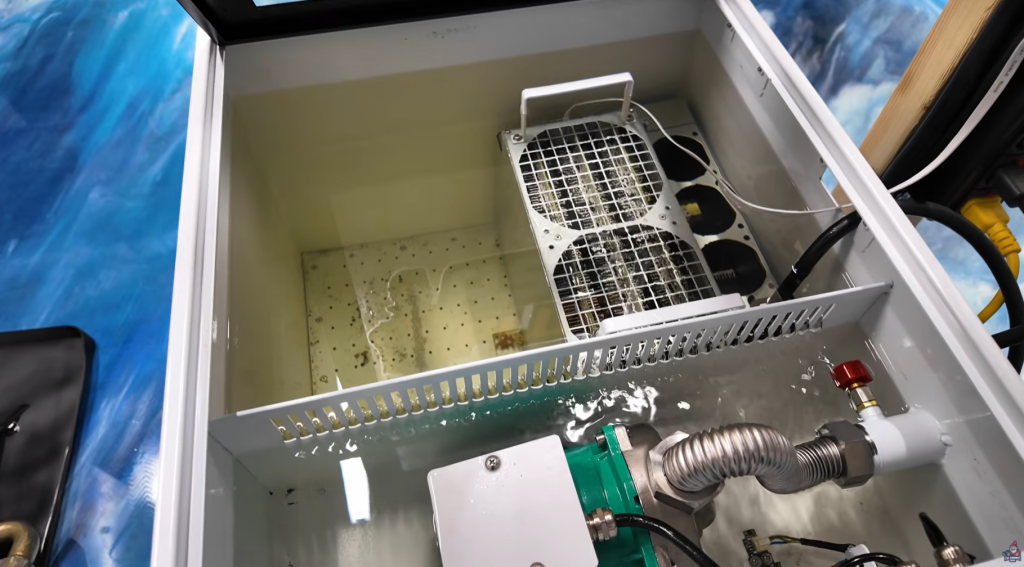
The centerpiece of the ASIC Plug Shed is an immersion cooling setup — a tank-based system where ASIC miners are submerged in dielectric oil rather than cooled by traditional air fans. Immersion cooling offers real advantages for performance and longevity. The oil maintains consistent temperatures across the entire miner, eliminates dust buildup, and dramatically reduces noise compared to the screaming fans of an air-cooled ASIC.
When it works, it’s one of the best ways to run high-powered mining hardware in a home setting. The problem is when it doesn’t!
Banging my Head Against a Wall
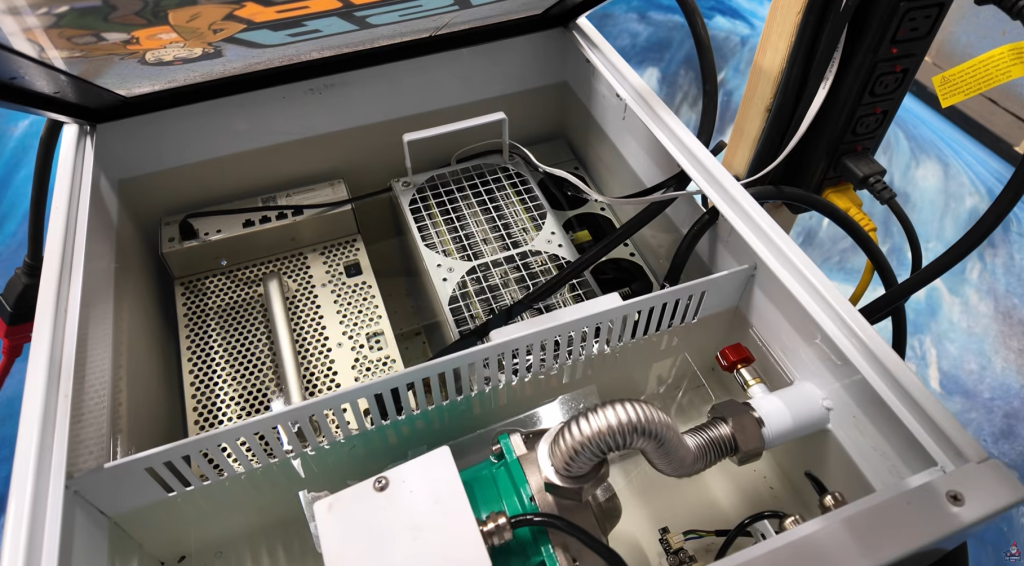
The immersion tank has been the source of significant frustration since its installation over the winter. The culprit: a pump that simply refused to move oil the way it was supposed to.
Working alongside the support team at Fog Hashing, we went through the full troubleshooting process — inspecting the control board, replacing the control board, swapping out the pump itself. Hours of back-and-forth, parts replaced, and the system still wasn’t circulating oil properly. One tank in the shed has been running beautifully the entire time, with an L9 and a Canaan Avalon A1566i sitting in it and performing well. But the second tank — with all the infrastructure already in place, dry cooler installed, electrical wired up — has just been sitting there, unusable.
At a certain point, the most practical solution isn’t more troubleshooting. It’s a replacement.
A C2 Kit Arrives from Georgia!
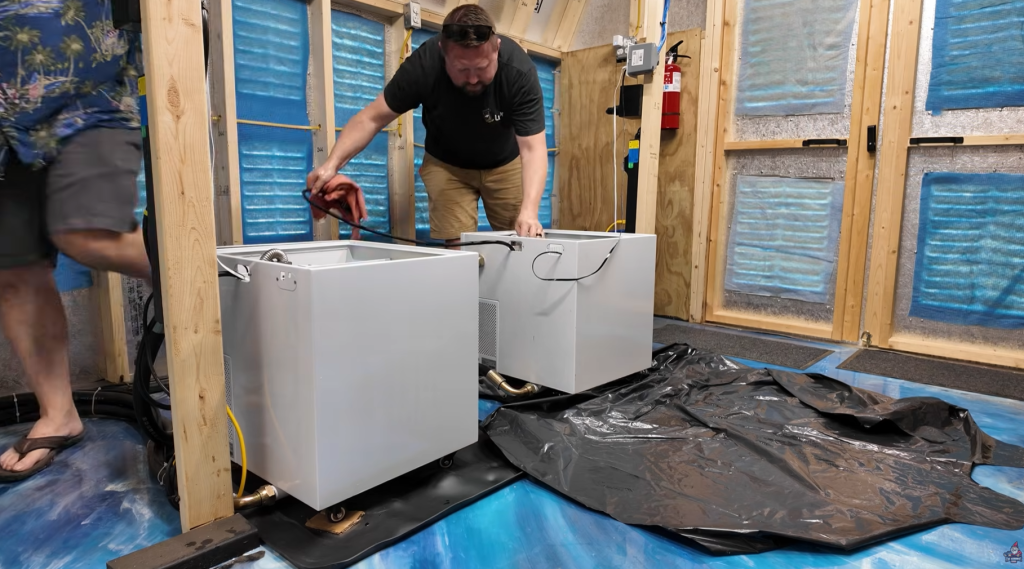
Enter Mike from BitDog Mining Company.
Mike was traveling through Pennsylvania from Georgia and reached out to say he had a used C2 kit available. A new unit runs over $500 plus another $300 or so in shipping from China — real money for what amounts to the core circulation and control components of an immersion tank. A used kit coming directly hand-delivered was a genuinely better option in every way.
Before Mike arrived, the old tank had to come out. That meant draining whatever oil remained inside, disconnecting the hoses, and physically wrestling the unit out of the shed. Immersion tanks are not light, the oil doesn’t drain on a clean schedule, and there’s really no graceful way to do it. Buckets, wooden blocks for leverage, and a healthy tolerance for mess are required equipment for this kind of job.
With the old tank cleared out, the Canaan A1566i was set up on a baker’s rack — a five-dollar find that works perfectly as a draining stand — and everything was staged and ready for the new hardware.
Installation Time!
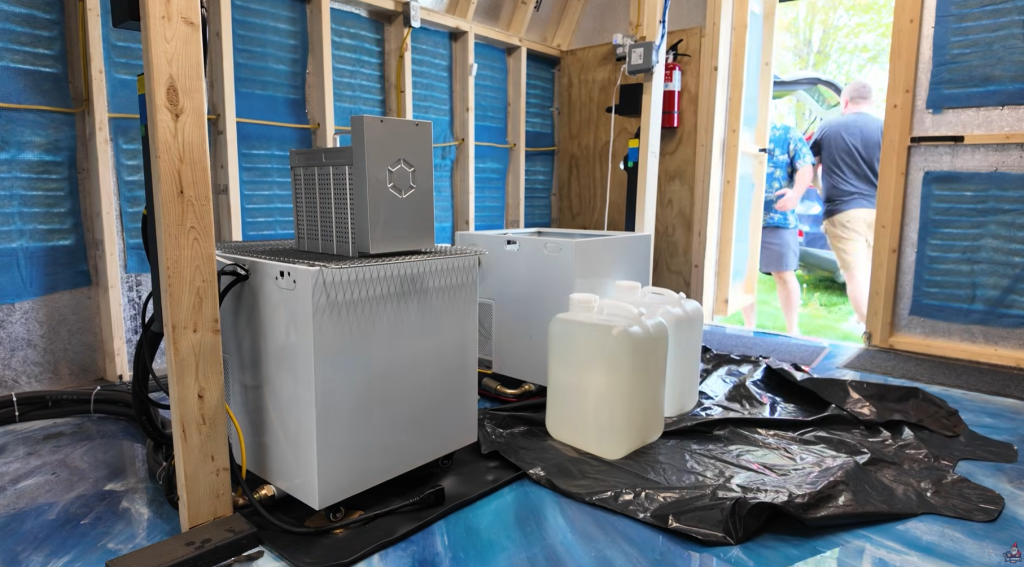
When Mike arrived, the hard part of the groundwork was already done. The dry cooler was in place. The electrical was sorted. The hoses were run. All that remained was getting the new C2 tank positioned, the hoses connected, sealed properly, and the system filled with oil.
The install itself went smoothly — right up until the pump initially wouldn’t prime. This is a known quirk of immersion systems: sometimes the pump needs to be “burped” to get oil moving through the lines properly. Mike knew exactly what to do, worked through it, and the system came to life.
The result: both immersion tanks now running simultaneously for the first time.
What the Numbers Look Like
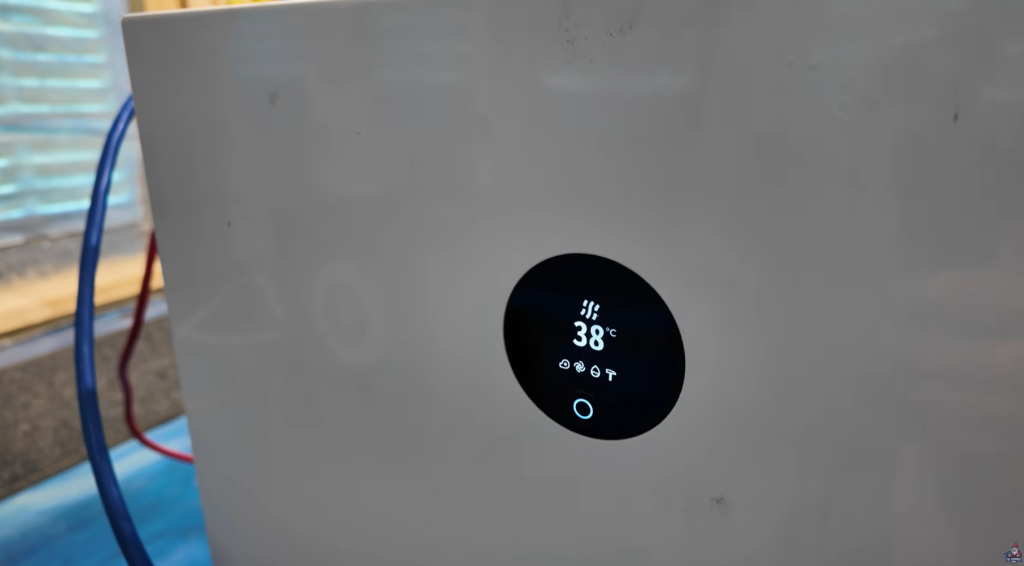
With both tanks operational, the performance data coming in is worth noting.
The L9 in the original tank is sitting at 34°C — exceptional for a miner that’s been running continuously, and a strong argument for immersion cooling in general. The new tank with the Canaan Avalon A1566i is running at 37–38°C, well within optimal operating range.
The L9 here has been the standout performer in the entire operation. Whether it’s been running at the compound or hosted elsewhere, this particular unit has been the most reliable and consistent of any L9 in the fleet. Immersion cooling likely deserves a significant amount of credit for that — stable, controlled temperatures reduce the thermal stress cycles that wear on mining hardware over time. It shows in the hashrate consistency and the lack of unexpected downtime.
The Case for Immersion Cooling
For anyone considering a serious home mining setup, the immersion experience here illustrates both the upside and the reality of the technology.
On the upside, the performance gains are genuine. Miners running in oil run cooler, run quieter, and — based on what we’re seeing with the L9 — appear to run more reliably over extended periods. For high-wattage hardware that would otherwise demand significant airflow infrastructure, immersion can actually simplify the setup by replacing a wall of fans with a single circulation system.
The tradeoff is complexity. Immersion cooling requires more upfront knowledge, more careful installation, and more troubleshooting when things go wrong than simply racking an air-cooled miner and plugging it in. A pump issue that would be trivial on an air-cooled setup becomes a multi-month project when the oil won’t circulate. That’s the reality of the technology at the home miner scale. One may argue going the route of immersion is not cost effective for home mining, I would disagree. The amount of time, labor and capital home miners would invest to “retro-fit” a home air cooled enviornment is wild. I can speak to it, i’ve done it many times on my own, made mistakes and blown loads of cash on “trying to make force it to work”. The two key factors when home mining are heat and sound management, the Fog Hashing C2 Immersion Kit checks all boxes.
The good news is that as more companies enter the immersion space and more experienced operators share knowledge — and yes, occasionally drive up from Georgia with replacement parts — the ecosystem is becoming meaningfully more accessible.
What’s Next: Two Open Immersion Slots

With both tanks now running, there are two open immersion slots to fill. The question on the table: given the current market, what hardware makes the most sense to add?
Immersion-ready ASICs are the obvious fit, but air-cooled miners can also be adapted with the right setup. Efficiency, current resale value, SHA-256 performance, and compatibility with the existing infrastructure all factor into the decision.
It’s a good problem to have. A few months ago, one tank wasn’t working at all. Now we’re making decisions about what to add to a fully operational dual-tank immersion setup.
That’s progress!
See You Next Time!
Got thoughts on what ASICs should fill those two open immersion slots? Drop your recommendations and join the conversation in The Hobbyist Miner Community Discord — join entirely free here!
For more on this topic, watch the full video: Immersion Mining Shed Update — C2 Kit Install & Two Tanks Finally Running