






IceRiver Is Stepping Into Bitcoin Mining — And This Prototype Chip Is Our First Real Look!

IceRiver has built its reputation on making crypto mining accessible. From entry-level home miners to full-scale ASIC hardware, the brand has consistently targeted a broader audience than the institutional players that dominate the space. So when the company announced at Mining Disrupt in early 2025 that they’d be entering the Bitcoin mining space with a brand new BTC chip, it was news worth paying attention to.
That announcement was made over a year ago. The miners still aren’t for sale. But at Bitcoin Vegas 2026, two IceRiver employees — no booth, just presence — handed over something that hasn’t been available to anyone outside the company: a working prototype of their first Bitcoin mining chip, housed in a small reference chassis called the BT0.
I had the pleasure of sitting down with Rezwin Mirza the Cheif Corporate Develop Office at BGIN, to discuss IceRiver stepping into Bitcoin Mining. Checkout the full interview here.
This is what we know, what we tested, and what it means for the road ahead.
What the BT0 Actually Is — And What It Isn’t
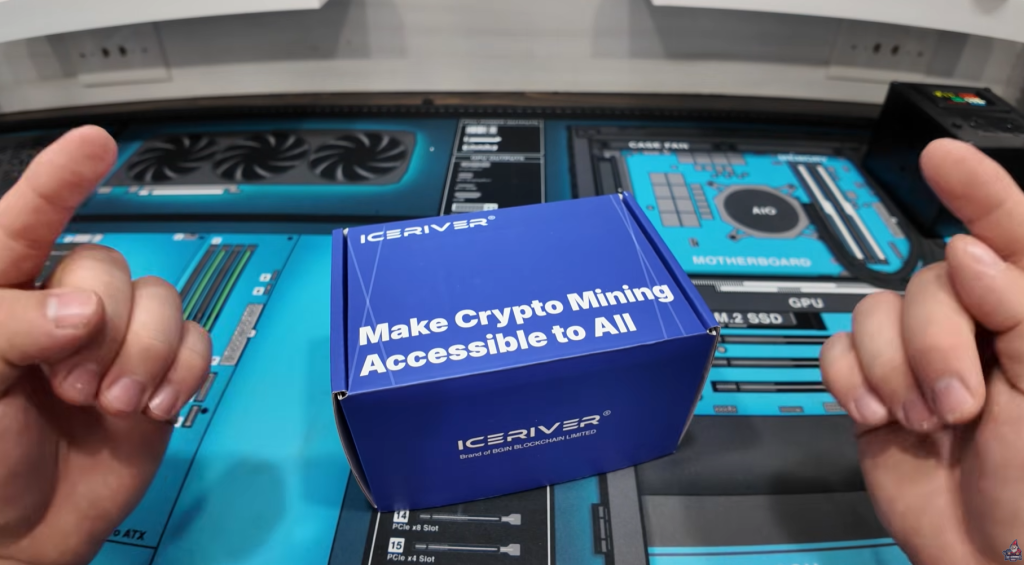
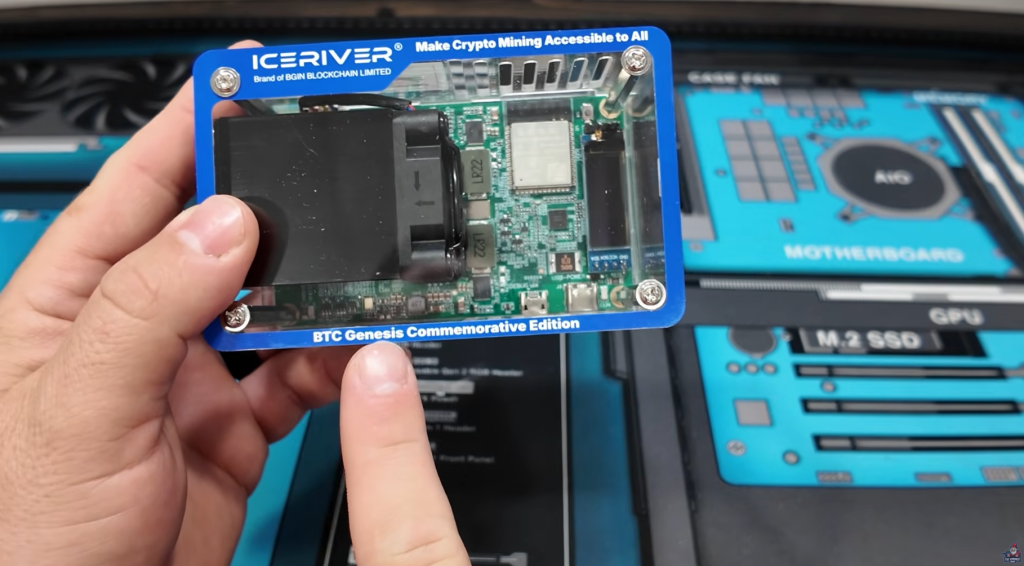
Let’s be clear about what landed on the desk here: this is not a product. It’s not for sale, it won’t ever be for sale, and IceRiver made that explicit. The BT0 is a commemorative prototype chassis — a vehicle for showing that the chip exists and works, not a preview of what consumer hardware will look like.
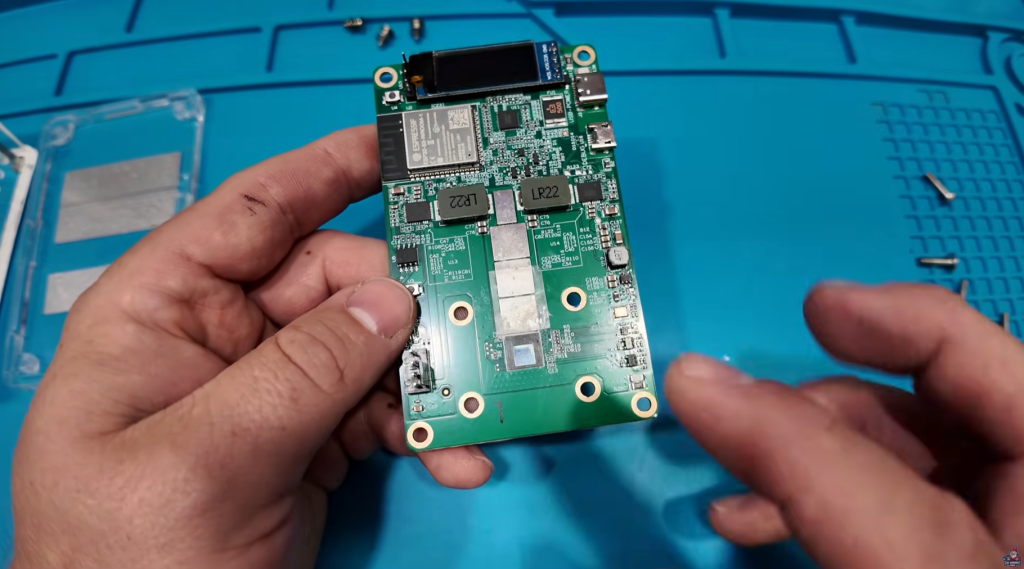
The enclosure itself is compact, superficially similar in footprint to small solo miners like the Mars Lander, but without any of the polish of a finished product. There’s a USB-C power port, a small display screen similar to what you’d find on a Bitaxe, an internal fan, and a heatsink with intake and exhaust airflow running through the unit. The bottom panel is labeled with the BGIN Technology branding — IceRiver’s parent company — and clearly marked “Sample Only, Not For Resale.”
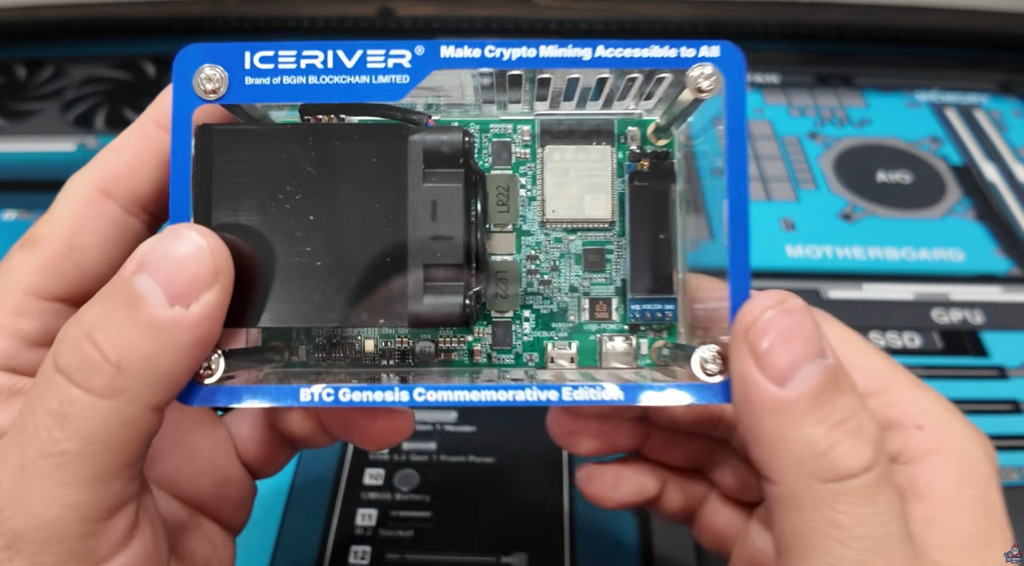
Inside the box: a commemorative card reading “BTC Genesis — Commemorative Edition, Limited, Not For Sale,” a basic manual, and no power cable. The unit runs on 5V at 3A, which means a Raspberry Pi USB-C cable works fine as a substitute — and that’s exactly what got used here.
It’s a deliberately minimal package for a deliberately limited purpose. IceRiver isn’t trying to sell this. They’re trying to prove the chip is real.
Setup and Interface
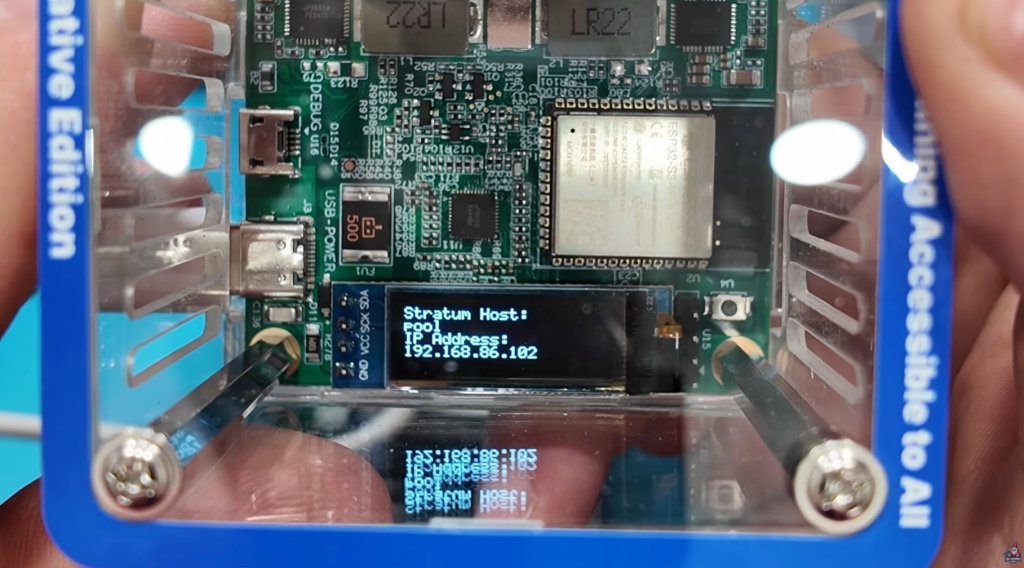
Powering on the BT0 brings up a small display screen that cycles through Wi-Fi setup, pool settings, and temperature information on rotation. The setup flow is nearly identical to the Bitaxe experience: connect to the miner’s broadcast network, enter your home Wi-Fi credentials, restart, and access the dashboard via the assigned IP address.
The web interface that loads up looks strikingly similar to AxeOS — clean, dark-mode, functional. It shows hashrate, temperature, pool connection, and uptime. For a prototype, the software layer is more polished than expected, which suggests IceRiver is building on established open-source firmware foundations rather than starting from scratch.
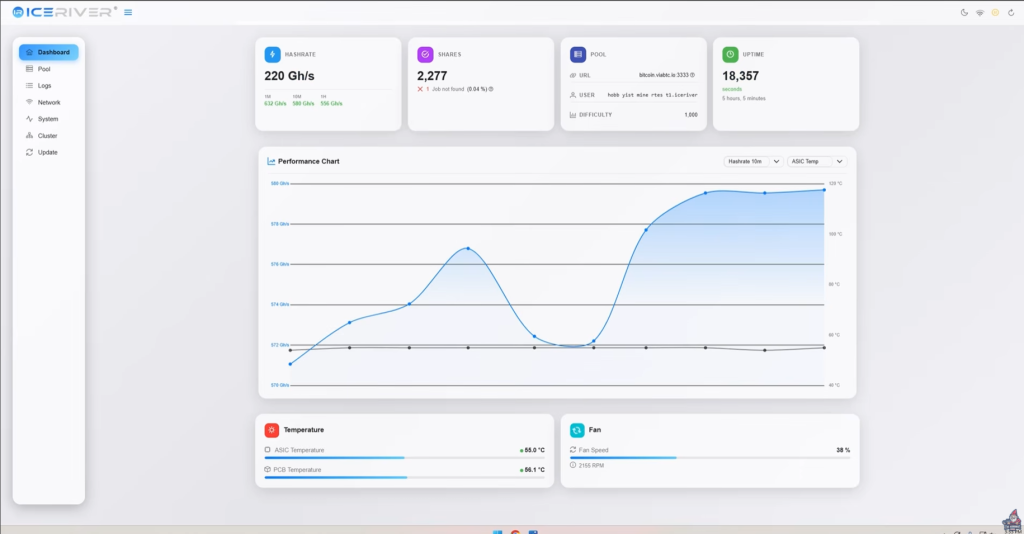
One significant quirk discovered during testing: this prototype will only mine on ViaBTC, and specifically only on the Smart Mining URL (bitcoin.viabtc.io:3333). Standard pool addresses — including ViaBTC’s own traditional BTC endpoint — don’t work. This isn’t a documented limitation anywhere in the included materials. It took several hours of trial and error across multiple pools to land on the right configuration. If you ever come across one of these units, skip straight to the Smart Mining URL and save yourself the headache.
HashRate Testing: An Honest Look at Messy Data
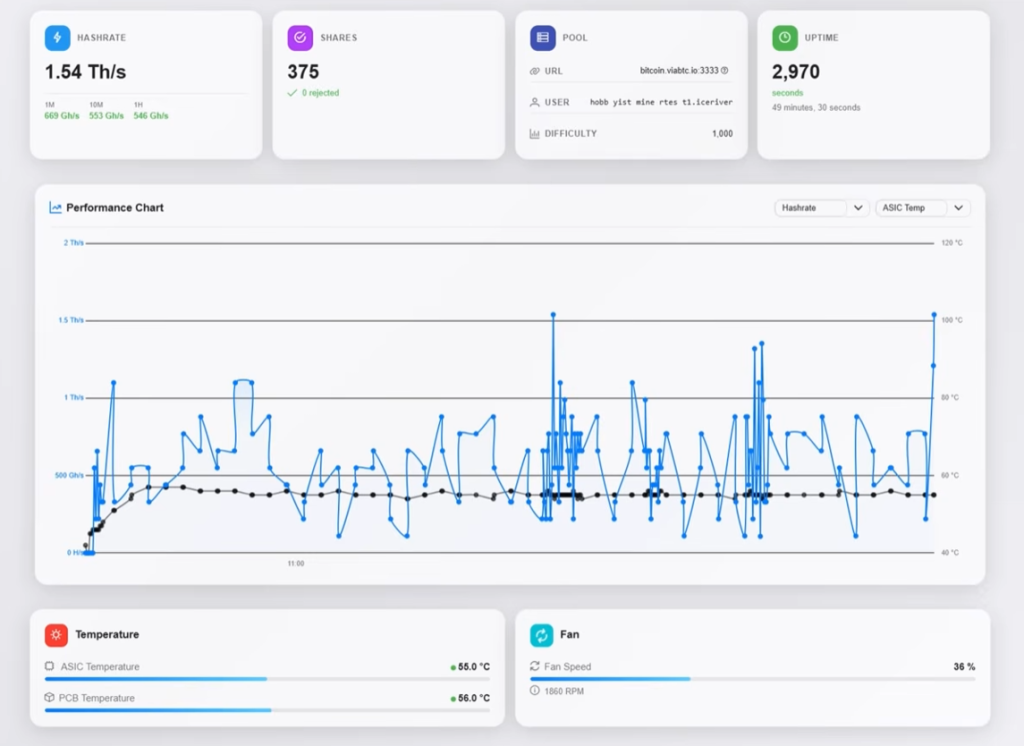
After over five hours of sustained mining, the hash rate data tells an interesting story — though not necessarily the one IceRiver might want told.
Here’s what the numbers looked like across the testing window:
- Lowest recorded hash rate: ~220 gigahash
- Highest recorded hash rate: ~1.54 terahash
- One-hour average: ~546 gigahash
- Pool-side peak: ~558–600 gigahash
That’s a spread of roughly 7x between the floor and ceiling on a single chip. The hashrate graph over the testing period is not a steady line — it’s a volatile, jagged trace that swings wildly without obvious cause.
IceRiver was upfront about this when the unit was handed over: the chip is not optimized in any way. They said it multiple times, and the data bears that out completely. This isn’t a chip running at a tuned performance profile. It’s a chip running in a reference chassis with no optimization work applied to clock speeds, voltage, or thermal management.
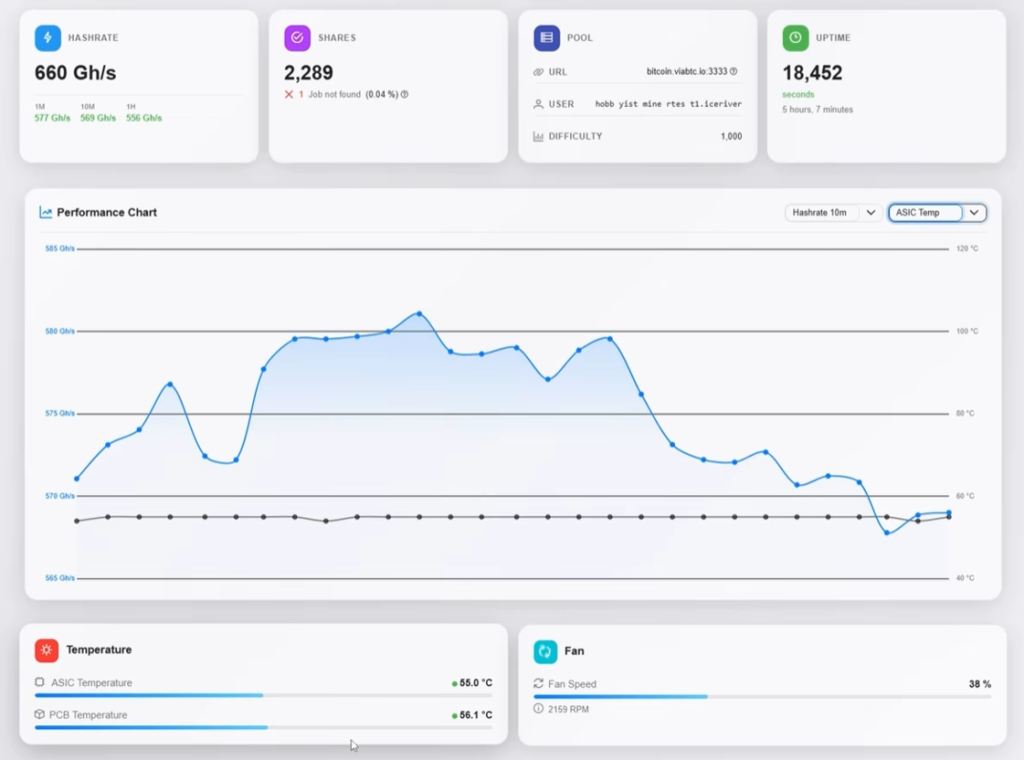
What that means practically is that the numbers here — good or bad — don’t tell us much about what a finished IceRiver Bitcoin miner will actually do. You can’t extrapolate efficiency, you can’t project hash-per-watt, and you can’t meaningfully compare this chip’s output to anything in production today. The data is informative about the chip’s existence. It’s not informative about the chip’s potential.
That’s not a criticism — it’s the honest context IceRiver provided and the data confirms.
Power levels at the Wall
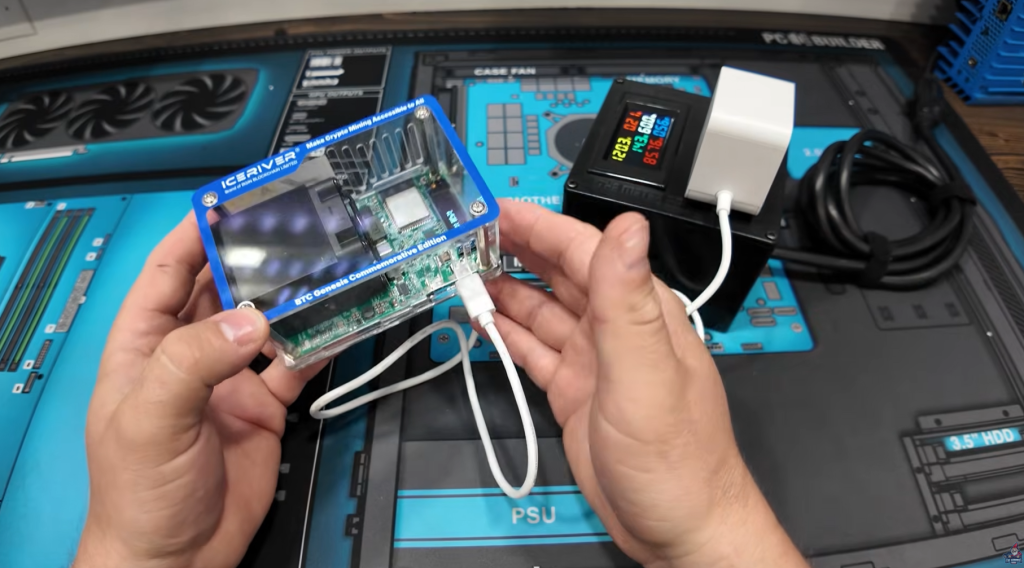
With the same caveat firmly in place: the BT0 drew 14.3 watts at the wall during testing.
That figure includes the fan, the ESP control board, the display, and all the overhead of the prototype chassis itself — not just the chip. There’s no way to isolate the chip’s actual power draw from the total system consumption in this configuration. IceRiver hasn’t published chip-level efficiency numbers, and this test setup doesn’t allow for the kind of precision measurement that would make the watt figure meaningful.
What 14.3 watts does tell you is that the prototype chassis runs cool and silent. There’s barely any perceptible fan noise from this unit, and the heat coming off the exhaust side is minimal. Whether that translates to an efficient production chip or simply reflects a chip that isn’t being pushed hard in an unoptimized state — that’s the open question.
Inside the BT0: A First Look at the Chip
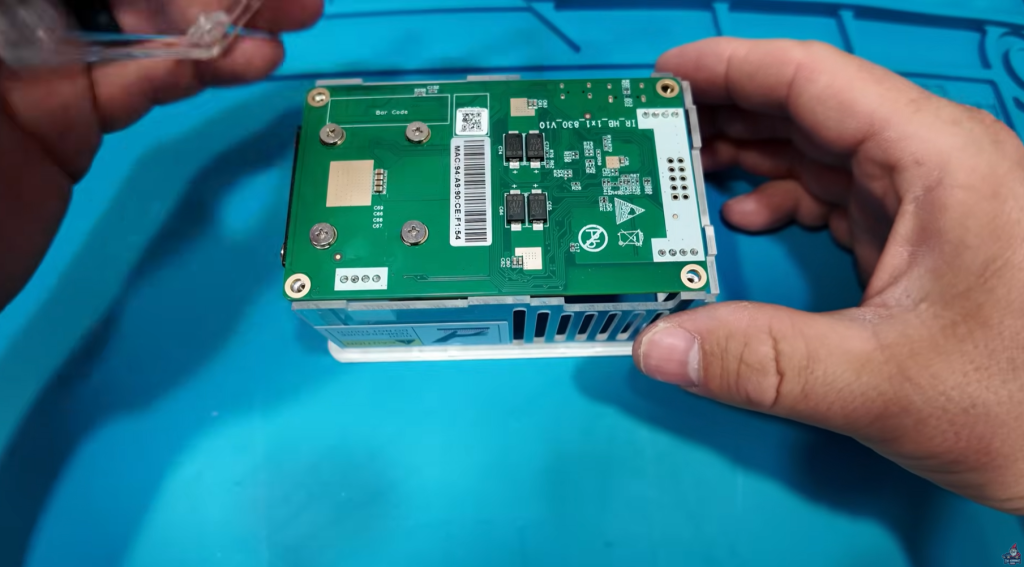
With the hashrate testing complete, the unit came apart for a closer look at what IceRiver has actually built.
Disassembly is straightforward — four screws on the base, the panels slide away cleanly, and the heatsink lifts off after unplugging the fan. What’s underneath is a single chip on a small board, surrounded by what appear to be thermal management components. IceRiver used a distinctive pink thermal compound between the chip and heatsink — a notable visual detail compared to the grey or silver compounds common on most mining hardware.
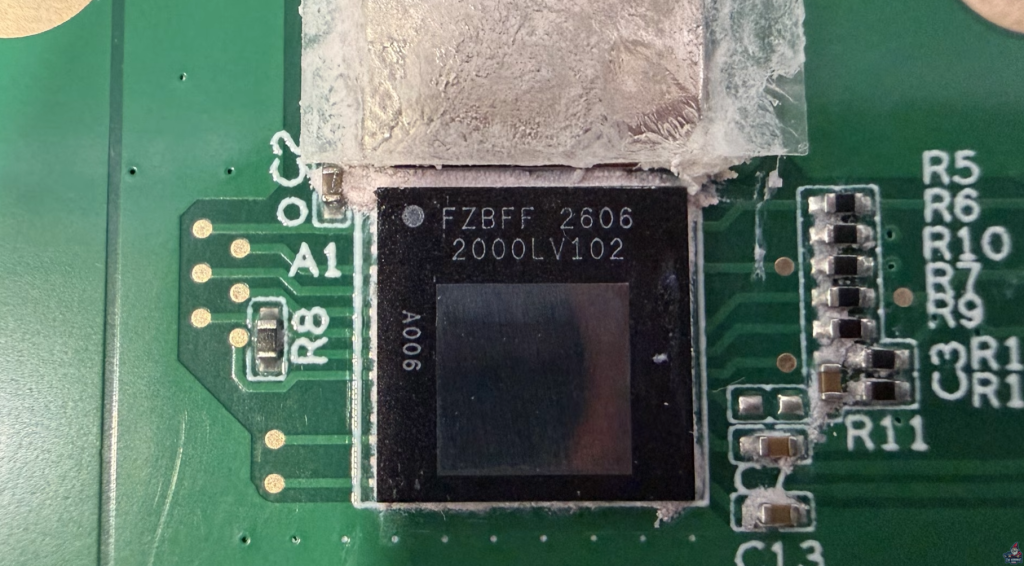
The chip itself is marked with FZBFF 2606 and 2000 LV102 on one face, with A006 on the side. What those markings mean at a technical level — how the die compares architecturally to chips from Bitmain, MicroBT, or newer entrants like Auradine — is beyond what can be assessed from a visual inspection alone. If anyone with semiconductor or ASIC design background has a read on the chip markings or design choices visible in the photos, please reachout and let me know.
What’s clear from the teardown is that this is a real chip, on a real board, producing real SHA-256 hashrate.
What This Actually Means for IceRiver’s Bitcoin Ambitions
Here’s the honest assessment: IceRiver entering the Bitcoin mining space is a bigger deal in theory than this prototype can demonstrate in practice.
Bitcoin mining hardware is the most competitive segment in the entire crypto mining industry. Bitmain has dominated it for years. MicroBT has carved out significant market share with the Whatsminer line. Canaan has been a major player in the space, dominating not just the home market but also the industrial space.
IceRiver has built a successful business in alternative algorithm miners — Kaspa, Aleo, and others where the competitive landscape is less entrenched. Those markets rewarded the company’s accessibility-first approach. Bitcoin is a different challenge entirely. The efficiency bar is higher, the competition is better-resourced, and the customers making purchasing decisions are often sophisticated operators running large fleets where efficiency per watt matters enormously.
None of that means IceRiver can’t compete. It means they’ll need to bring a genuinely efficient, well-priced, well-supported product to market — not just proof that the chip exists. The BT0 is the latter. The former is still ahead of them.
The tape-out for their production BTC chip has reportedly been completed more recently, with a lineup of miners expected to follow. When those products arrive with real specs, real optimization, and real availability, that’s when the picture becomes clearer.
For now, the prototype does exactly what IceRiver intended it to do: it confirms the chip is real, generates conversation, and signals that the company is serious about Bitcoin. The rest remains to be seen.
See You Next Time!
What do you think IceRiver’s chances are in the Bitcoin mining space? Drop your thoughts and join the conversation in The Hobbyist Miner Community Discord — free to join here!