






He Earned 1 Bitcoin in Less Than 2 Months Mining Crypto. Here’s How He Did It!

What started as a gamble on nearly worthless ASIC miners turned into one of the craziest cryptocurrency mining success stories I’ve ever witnessed.
Imagine purchasing cryptocurrency mining hardware that most people considered obsolete, plugging it in, and watching it pay for itself in a matter of hours. Sounds too good to be true, right? Well, that’s exactly what happened to fellow cryptocurrency miner and content creator Mining Stacker, who managed to generate over 1 Bitcoin in realized profits in less than two months.
I recently sat down with Mining Stacker on the Everyday Miner Podcast to discuss how he accomplished this incredible milestone, the decisions that made it possible, and whether other home miners still have an opportunity to capitalize on what has become one of the most unusual mining gold rushes we’ve seen in years.
But before we dive into the numbers, there’s something important to understand. This wasn’t your typical cryptocurrency mining experience. Even as two miners who have experienced multiple bull and bear markets, neither of us had ever witnessed profitability quite like this.
And according to Mining Stacker, the opportunity that made it possible could disappear just as quickly as it arrived.
Enjoy this entire sit down interview with Mining Stacker over on Youtube
The Bitcoin Fork That Changed Everything
It all started with a controversial cryptocurrency project called XBT, a Bitcoin fork that emerged from ongoing disagreements within the Bitcoin community surrounding Bitcoin Core, Bitcoin Knots, and BIP-110.
Without getting too deep into the technical debates, the project attracted attention from individuals who wanted to take Bitcoin in a different direction. Among those associated with the movement was well-known Bitcoin developer Luke Dashjr.
What made XBT particularly interesting to cryptocurrency miners wasn’t necessarily the political drama surrounding its creation. Instead, it was the project’s decision to use the Blake2b mining algorithm.
For years, Blake2b ASIC miners had been collecting dust. Many were no longer profitable to operate, especially for home miners dealing with higher electricity rates.
Suddenly, these forgotten machines had a reason to exist again.
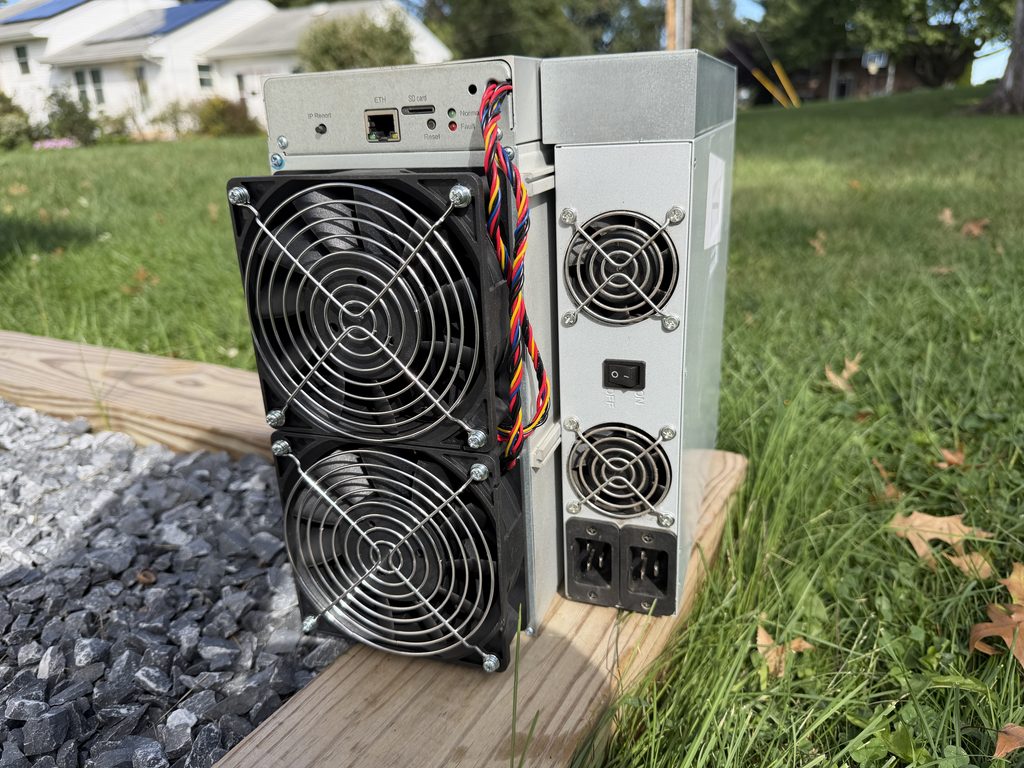
Older Goldshell and IBelink miners, including the BM-S3 and other compatible Blake2b ASICs, began attracting attention as miners realized they could potentially earn substantial amounts of this new cryptocurrency.
And while many people, including myself, initially dismissed the project as just another Bitcoin fork destined to disappear, Mining Stacker saw something different.
He saw an opportunity.

How Mining Stacker Discovered the Opportunity Before Everyone Else
Interestingly enough, Mining Stacker didn’t discover XBT through a mining profitability calculator, cryptocurrency news website, or even a mining community.
He discovered it through his own YouTube analytics.
Around the middle of August, he noticed something unusual happening on his channel. Several older videos covering Blake2b ASIC miners had suddenly started receiving significantly more views.
These were videos featuring hardware that hadn’t been relevant for years.
Curious about the sudden interest, he began investigating whether the underlying cryptocurrency had increased in price or whether network hashrate had dropped enough to make the hardware profitable again.
Neither explanation made sense.
After digging through conversations on X, he discovered discussions surrounding the upcoming Bitcoin fork and its decision to use Blake2b.
That was the moment everything clicked.
Mining Stacker recognized that the number of available compatible ASIC miners was relatively limited, and if demand for mining XBT increased, these older machines could become incredibly valuable.
Rather than waiting for the project to prove itself, he decided to take a gamble.
His initial purchase included three Goldshell HS5 miners for approximately $1,300 total. Shortly afterward, he purchased two SC5 Pro 2 miners for around $800 each, including shipping.
At the time, these weren’t particularly exciting investments. They were older machines with limited profitability and uncertain futures.
But as we would soon discover, timing was everything!
The First Two Weeks Were Absolutely Insane
When XBT launched, something happened that very few miners had anticipated.
The project’s difficulty adjustment mechanism struggled to keep up with the enormous amount of hashrate suddenly joining the network.
Under normal circumstances, Bitcoin-style networks are designed around a target block time of approximately ten minutes. However, during XBT’s early days, blocks were being discovered in less than 30 seconds.
That meant miners were earning rewards at an extraordinary pace.
Mining Stacker shared one example that almost sounded unbelievable.
During one of his earliest days mining XBT, a single Goldshell HS5 discovered approximately eight blocks. With each block rewarding three XBT, that one miner generated 24 coins in a single day.
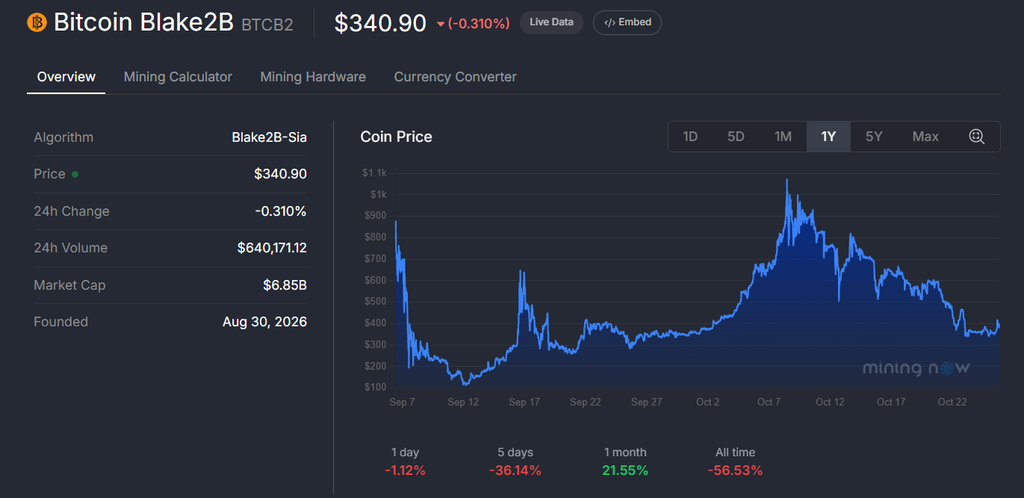
At a hypothetical valuation of $1,000 per coin, that represented $24,000 worth of cryptocurrency from a miner that had cost only a few hundred dollars.
Of course, the coins weren’t necessarily worth $1,000 when they were originally mined, and paper valuations aren’t the same as realized profits. Nevertheless, it demonstrates how dramatically this opportunity developed.
For comparison, many home cryptocurrency miners spend months or even years trying to recover the original cost of their hardware.
In this situation, Mining Stacker witnessed machines potentially recovering their purchase prices within hours.
But he wasn’t relying exclusively on mining XBT directly.
He had another strategy that would ultimately become one of the biggest contributors to his Bitcoin earnings.
The Real Money Was in Mining Rig Rentals
One of the most fascinating parts of my conversation with Mining Stacker was learning how much of his success came from renting out mining hashrate rather than simply accumulating XBT.
For anyone unfamiliar, Mining Rig Rentals is a platform that allows ASIC and GPU owners to rent their mining power to other individuals in exchange for payment.
Instead of purchasing mining hardware themselves, customers can rent existing machines and direct that hashrate toward a cryptocurrency network of their choosing.
In Mining Stacker‘s case, he initially divided his hardware between solo mining XBT and renting the machines to other users.
As demand for Blake2b hashrate exploded, rental prices climbed to levels neither of us had experienced before.
At one point, Mining Stacker secured a two-week rental contract for a single ASIC miner worth nearly 0.25 BTC.
That’s nearly a quarter of a Bitcoin earned from renting out one machine that originally cost him approximately $800.
Think about that for a moment.
The renter was willing to spend an extraordinary amount of Bitcoin simply to access the machine’s hashrate and mine XBT.
Mining Stacker explained that many renters weren’t necessarily approaching the opportunity from a traditional profitability perspective. Some were long-term supporters of the project who preferred acquiring XBT through mining rather than purchasing it directly through an exchange.
For certain individuals, privacy was a significant motivation. They wanted to obtain coins without relying on exchange accounts or providing personal information.
Whatever their motivations, demand for rental hashrate created an incredibly lucrative market for the relatively small number of people who owned compatible hardware.
As solo mining became increasingly difficult, Mining Stacker gradually shifted more of his machines toward rentals.
Eventually, renting out his entire mining operation became his preferred strategy.
From Old ASIC Miners to a 75 TH/s Mining Operation
As the XBT mining gold rush continued, Mining Stacker began upgrading his operation.
The original Goldshell HS5 miners that he had purchased cheaply were suddenly commanding significantly higher resale prices.
He eventually sold those machines for approximately $2,000 to $2,500 each, using the proceeds to purchase newer and more efficient hardware.
Rather than continually injecting new capital into the operation, he was able to upgrade portions of his mining fleet using money generated from selling his older equipment.
By the time we recorded our interview, his mining operation consisted of approximately six ASIC miners producing a combined 75 TH/s of Blake2b hashrate.
His setup included two SC5 Pro 2 miners, an SE6, and several additional higher-efficiency units, including ARI 31 miners operating in lower-power configurations.
Power management also played an important role.
With three available 30-amp circuits, Mining Stacker carefully balanced his equipment to maximize the hashrate available within his electrical infrastructure.
What impressed me most wasn’t simply how much hardware he had accumulated. It was how little money he had invested relative to the returns.
According to Mining Stacker, his total hardware investment was approximately $7,600, with another $1,700 in electricity costs over nearly two months.
And that brings us to the number everyone wants to know.
The Final Numbers: Over 1 Bitcoin in Realized Profits
During our interview, I asked Mining Stacker to break down exactly how much money he had made.
His answer was remarkable.
In less than two months, Mining Stacker reported surpassing one full Bitcoin in realized profit, while still operating his mining equipment and continuing to earn additional revenue.
He estimated that mining rig rentals alone had generated approximately 0.75 BTC, with close to 0.6 BTC earned during the incredibly lucrative first two weeks.
That’s an enormous percentage of his total rental earnings concentrated into a very short window.
And these figures didn’t include the complete potential value of the XBT coins he was still holding or the resale value of his mining hardware.
Mining Stacker also developed a longer-term strategy for his remaining XBT holdings. Rather than selling everything immediately, he planned to sell one coin on days when the market price exceeded $500.
Whether that strategy ultimately produces additional profits remains to be seen, but it highlights how he balanced taking profits with maintaining exposure to a highly speculative project.
What makes the story particularly interesting is that Mining Stacker has experienced other successful cryptocurrency investments before, including Kaspa, Helium, and Solana.
However, those opportunities generally took months or years to produce significant returns.
XBT was different.

Why XBT Mining Could Be Much Riskier Than It Looks
Hearing that someone earned over one Bitcoin in less than two months might make you want to immediately start shopping for Blake2b ASIC miners.
But both Mining Stacker and I agree that this would be an extremely risky decision.
The economics today are very different from those experienced by the earliest participants.
First, ASIC hardware prices have increased dramatically. Machines that were previously nearly worthless are now selling for thousands of dollars.
Second, network difficulty has risen considerably, making it much more difficult to earn the same number of XBT coins through traditional mining.
Third, the project has introduced controversial restrictions and lockup proposals affecting coin emissions and mining incentives.
During our conversation, we discussed the original 45-day restrictions, the possibility of a one-year period, and ongoing disagreements between node operators and miners.
Mining Stacker was particularly critical of these developments, arguing that the project’s direction created substantial uncertainty for those investing in physical mining equipment.
He also questioned whether the current Blake2b algorithm would remain viable over the long term.
Most importantly, he believes the elevated mining rental market cannot continue indefinitely.
As more hardware becomes available, demand changes, and profitability declines, renters may eventually become unwilling to pay the extraordinary premiums that made this opportunity possible.
At that point, electricity efficiency, hardware purchase prices, and operational costs will once again determine which miners can survive.
That’s a reality every home cryptocurrency miner needs to understand.
What Happens Next for Mining Stacker?
Despite already earning more than one Bitcoin, Mining Stacker isn’t planning to shut down his machines anytime soon.
His strategy is straightforward: continue renting his hashrate while the market remains profitable.
He understands that the opportunity might last another few weeks, several months, or disappear much sooner than expected.
Interestingly, he admitted that he had already predicted the end of this mining boom multiple times, only to watch it continue longer than anticipated.
Even he has been surprised by its staying power.
But rather than spending heavily on additional hardware at today’s elevated prices, his focus is on extracting as much value as possible from the equipment he already owns.
And considering how much profit he has already generated, he is comfortable continuing to operate those machines even if their long-term resale value eventually falls dramatically.

A Once-in-a-Lifetime Crypto Mining Opportunity?
I’ve been cryptocurrency mining for more than six years, and I’ve witnessed plenty of unusual opportunities during that time.
We’ve seen GPU mining profitability explode, ASIC miners become obsolete almost overnight, and forgotten cryptocurrencies suddenly capture the attention of the mining community.
But watching someone turn a relatively modest hardware investment into more than one Bitcoin in realized profit in less than two months is something extraordinary.
Mining Stacker’s experience demonstrates just how important timing, research, and adaptability can be in cryptocurrency mining.
He recognized unusual activity before most people understood what was happening, acquired hardware while it was still affordable, and adjusted his strategy as the economics changed.
However, his success shouldn’t be mistaken for a repeatable formula or a guarantee of future mining profitability.
The same project that made some early participants incredibly profitable could leave latecomers holding expensive, unprofitable equipment.
Sometimes the biggest opportunity in cryptocurrency mining isn’t buying the newest, most powerful ASIC. It’s recognizing when the market suddenly gives an old machine a second life.
Congratulations to Mining Stacker on an incredible win!
If you want to learn more about his experience, I highly recommend checking out his YouTube channel, where he has documented the XBT mining opportunity in detail.
And remember, whether you’re mining Bitcoin, experimenting with alternative cryptocurrencies, or bringing old ASIC miners back to life, always do your own research before making an investment.
Finally come share your thoughts and questions on XBT and Blake2B Mining in The Hobbyist Miner Community Discord, free to join here
Enjoy this entire sit down interview with Mining Stacker over on Youtube