






The Nexus S1 Surprised Everyone, with 10TH/s of BM1373 Power!
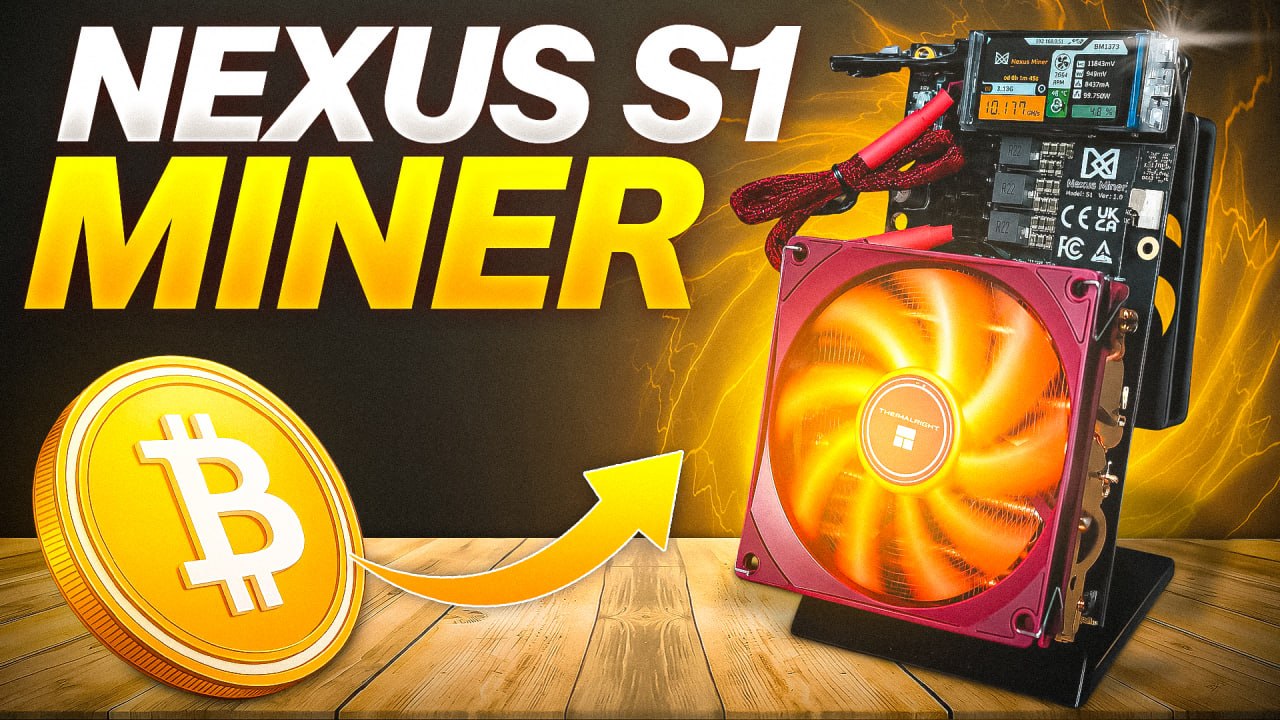
There’s a number that keeps coming up when talking about the Nexus S1, and it’s worth sitting with for a moment: 10TH/s at 100 watts.
To put that in perspective, just a few years ago, a first generation full-size Bitcoin ASIC delivered 100 TH/s at 3,200 watts. Ten Nexus S1s would match that output at 1,000 watts. The efficiency gap between then and now is staggering, and the Nexus S1 sits right at the leading edge of what’s currently possible in a home riendly solo miner form factor.
It’s also running a chip that nothing else in the solo miner category has and that alone makes it worth a close look.
Check out the full unboxing, teardown, and performance testing here:
Nexus S1 Review — 10 Terahash Home Solo Bitcoin Miner
What is the Nexus S1?
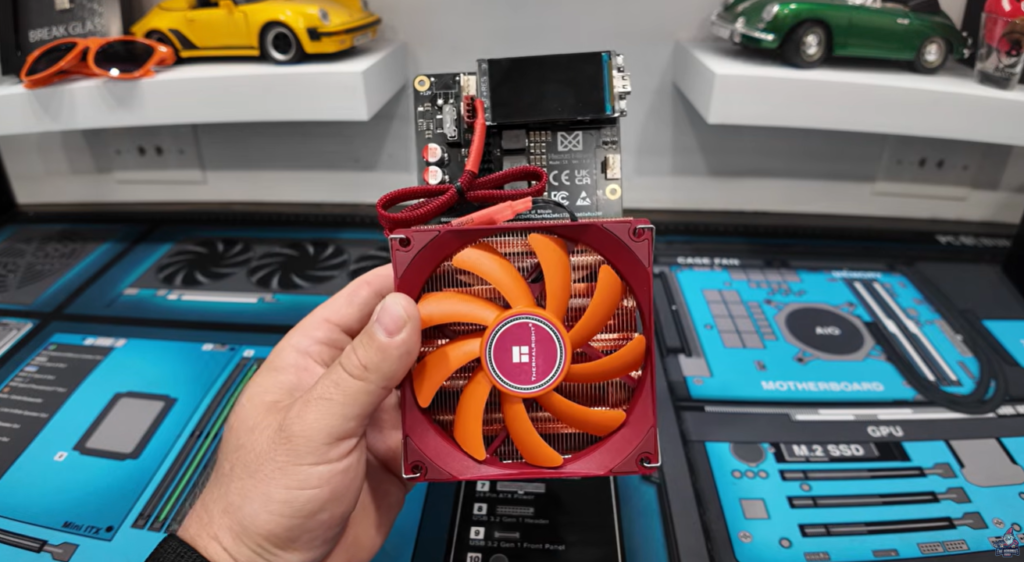
The Nexus S1 is a home solo Bitcoin miner from Helium Deploy, designed to mine SHA-256 coins, Bitcoin and Bitcoin Cash being the primary targets. It’s a desktop form factor device built around serious cooling hardware and a chip generation that hasn’t appeared in any other solo miner on the market.
The unit ships with a Meanwell LRS-350 power supply, an XT30 connector running power into the back of the unit, and a standard wall power cable. The included stand props the miner at a clean display angle, and a small but capable screen on the front face cycles through key stats, pool information, frequency and voltage readings, Bitcoin price, temperature, and global stats, at a glance without needing to open a dashboard.
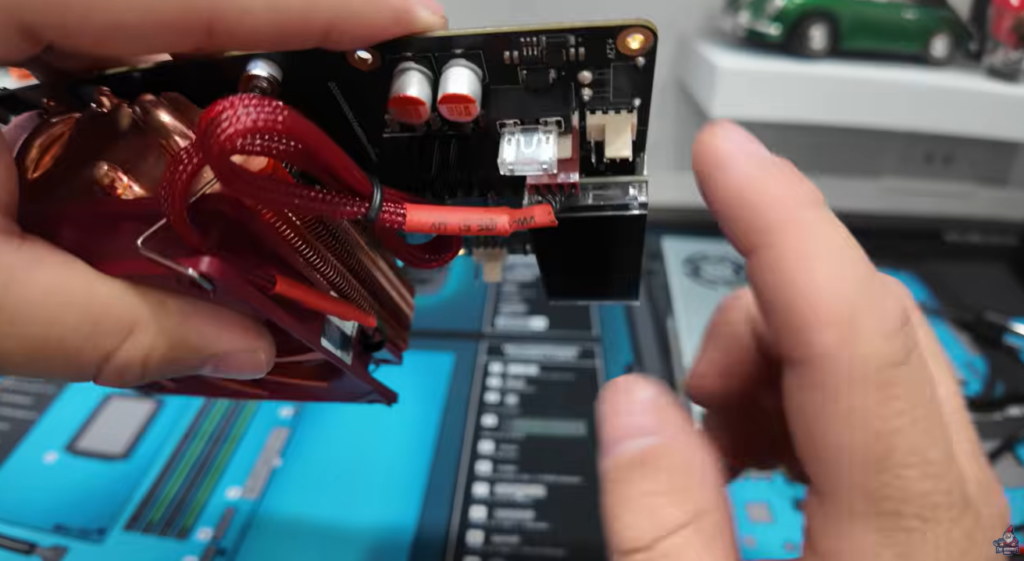
First impressions out of the box: this thing is heavy. The copper heatsink inside is not a lightweight afterthought, it’s a serious piece of thermal hardware, and the weight reflects that. The orange Thermalright fan mounted to the front is immediately noticeable, both visually and because of how quiet it runs relative to the hash rate it’s supporting.
The bottom of the unit features an engraving of the Bitcoin genesis block, a detail that signals the design intent behind the product. This isn’t just a mining appliance. It’s built for people who care about what they’re running.
Why the BM1373 Chip Matters?
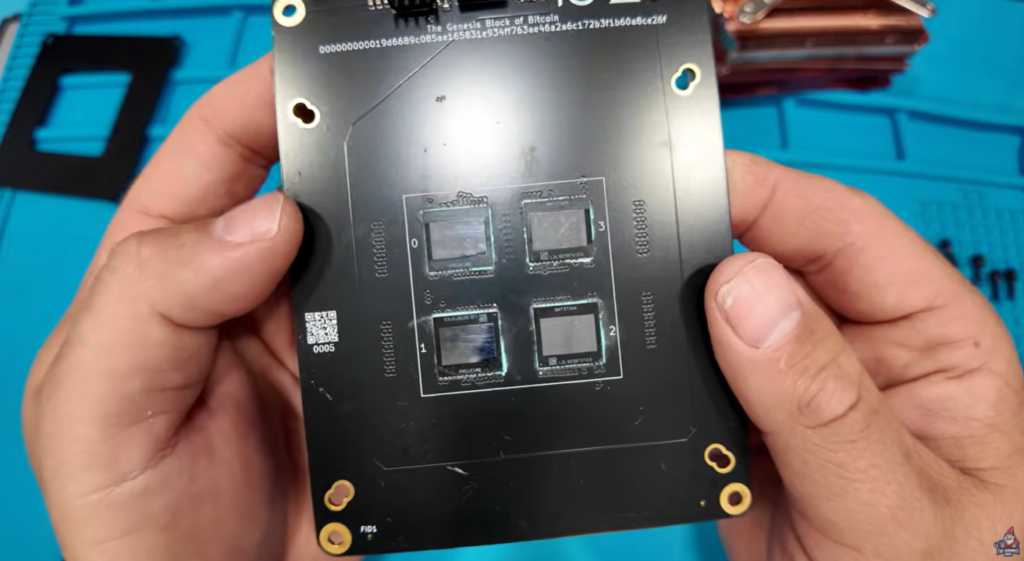
The headline hardware story inside the Nexus S1 is the BM1373 chip and this is genuinely significant for the solo miner category.
The BM1373 is the same chip generation used in some of the newest commercial grade Bitcoin ASICs, including hardware in the S23 family. Nothing else currently available in the home solo miner space is running this chip. Opening up the Nexus S1 reveals four BM1373 chips mounted on the board, each substantially larger than the chips found in a typical Bitaxe. The size difference alone communicates the performance gap.
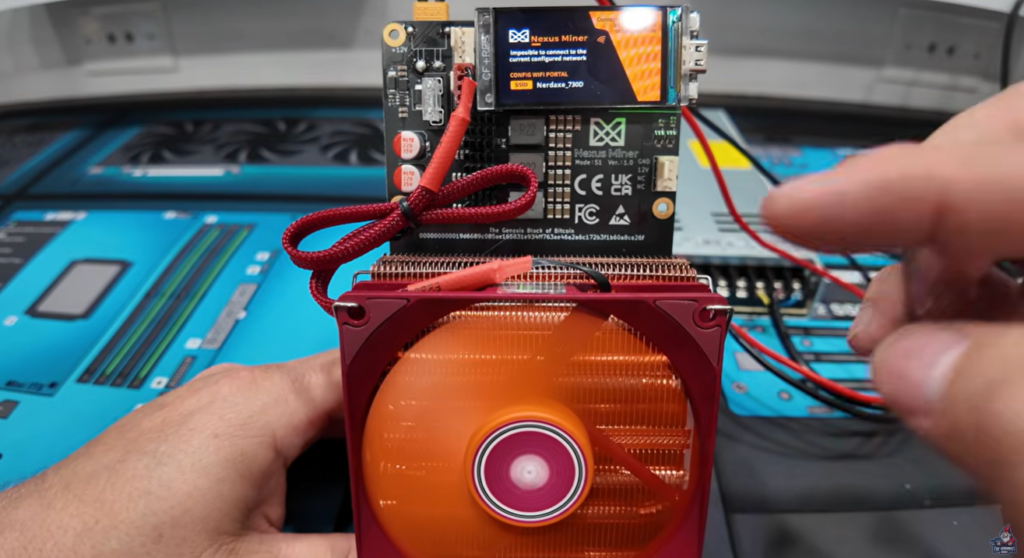
For context the BM1370 found in devices like the Bitaxe and NerdQAxe is an excellent chip for its category. The BM1373 is the next generation beyond that, more efficient, higher throughput per chip, and designed for the demanding requirements of commercial mining hardware. Putting four of them in a home friendly enclosure is what makes the 10 TH/s figure possible.
The unit reviewed here is a prototype, serial number 00005, one of very few in existence. The production model is expected to ship around July 2026 and will include improvements to the power delivery system including heat shrink wire connectors and a cleaner overall assembly.
HashRate, Watts, Noise, and Thermals
HashRate
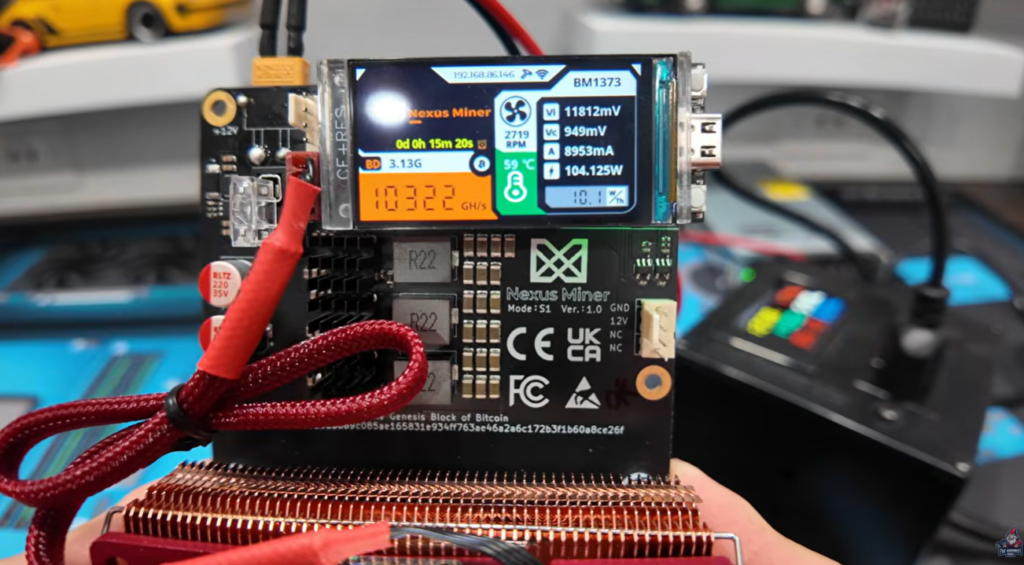
The Nexus S1 hits its advertised 10 TH/s faster than any comparable device tested here. Within two minutes of powering on, the unit was already climbing past 8, then 9, then 10 TH/s. After 15 minutes of runtime, it settled in consistently at 10.3 terahash, above the advertised spec. Pool side hashrate confirmed at 10.69 TH/s on an Umbrel node running my own pool and node.
For comparison, some home miners like the GekkoScience lineup take upwards of an hour to ramp to full hash rate. The Nexus S1 is at full speed in under two minutes.
Power Consumption
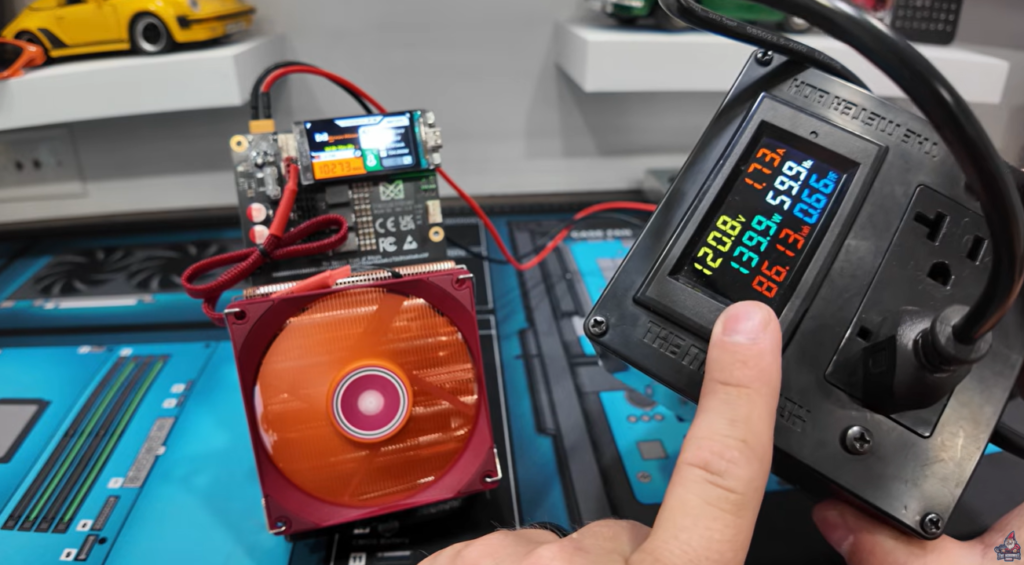
This is where the numbers diverge from the spec sheet. The Nexus S1 is advertised at 100 watts. Actual measured draw at the wall came in at approximately 140 watts, 40% above the listed figure. Some of that gap can be attributed to the prototype spec power supply being less efficient than what will ship with production units. Regardless, 140 watts is still a reasonable draw for 10+ TH/s, and the final production hardware may close some of that gap. It’s worth going in with realistic expectations rather than the headline number.
Noise
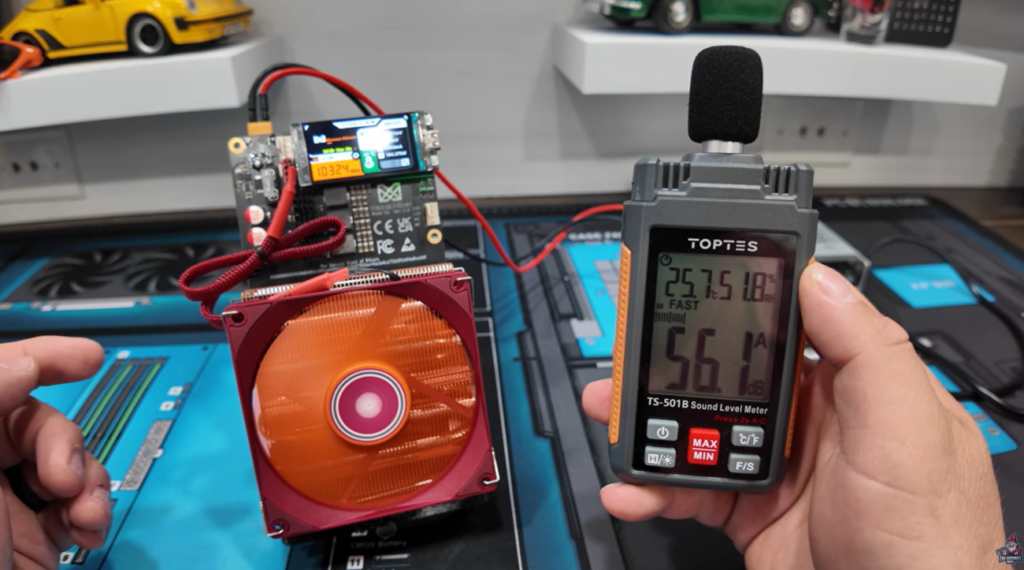
At 100% fan speed, the Nexus S1 measured 55 decibels at close range. For a miner pushing over 10 TH/s, that’s genuinely impressive. The Thermalright fan runs with a smooth, low tone rather than the high frequency whine common on smaller miners. Bedroom or office use is realistic at this noise level.
Thermals
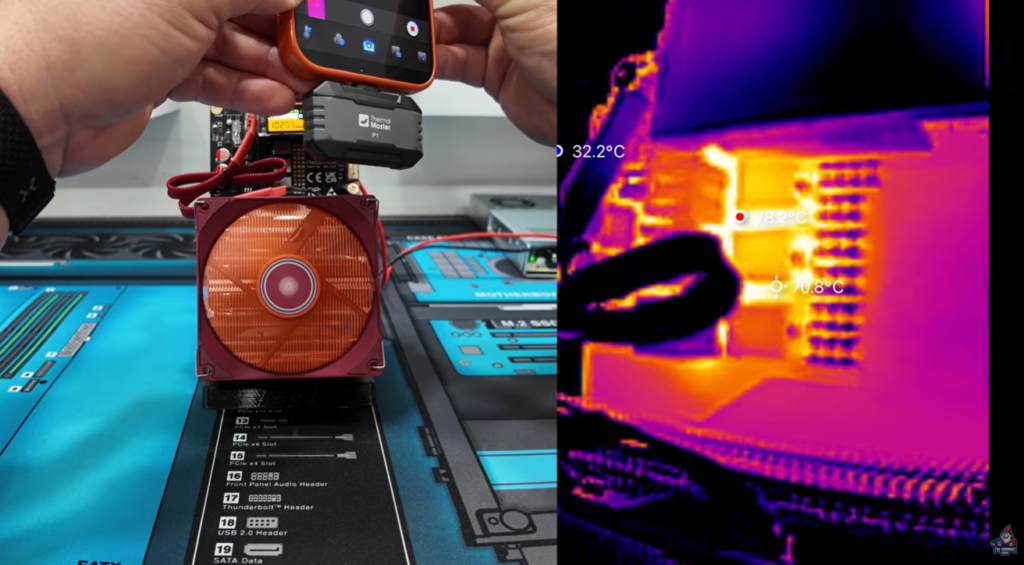
Using a thermal camera, the hottest points on the unit during operation reached 78–79°C at the heatsink center, with the exhaust side of the unit measuring up to 82°C. The copper heatsink itself stays comparatively cool, the heat is concentrated at the chip to heatsink interface and the exhaust zone. The back of the unit runs noticeably warm, and additional airflow behind the mine, a small supplemental fan pointed at the exhaust side, would be a worthwhile addition in any enclosed space.
Dashboard and Software
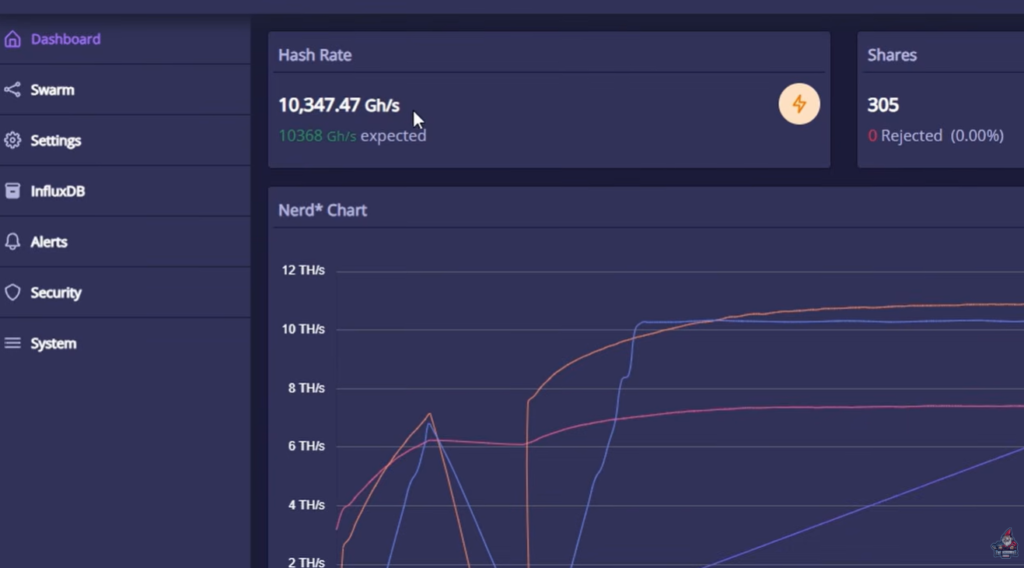
The Nexus S1 runs its own web based dashboard accessible via local IP address, currently in prototype form with further development expected before the production release.
Key features available in the current firmware include:
- Dark and light mode toggle
- Swarm mechanic for discovering and displaying other compatible miners on the local network
- Pool and SSID configuration under settings
- Overclock capability — adjustable frequency and core voltage accessible via a “danger zone” toggle under miner settings (not tested in this review)
- Fan controller — manual or auto mode, set to 100% manual from factory
- Alert system with watchdog features including block found notifications and best difficulty alerts, with Discord webhook integration
- InfluxDB support for data logging
- System controls — restart and shutdown options with log viewing
The Discord webhook integration for alerts is a notable addition, Telegram webhooks are more common in this category, so seeing native Discord support is a welcome differentiator for anyone running a Discord-based mining community or notification setup.
Solo mining pool configuration is straightforward. The unit was pointed at a home Umbrel node running Bitcoin and Bitcoin Cash pools, with the swarm mechanic pulling in surrounding devices on the network automatically.
Setup your own Home Bitcoin Node and Pool for Solo Mining Below
Solo Mining Odds: Bitcoin vs. Bitcoin Cash
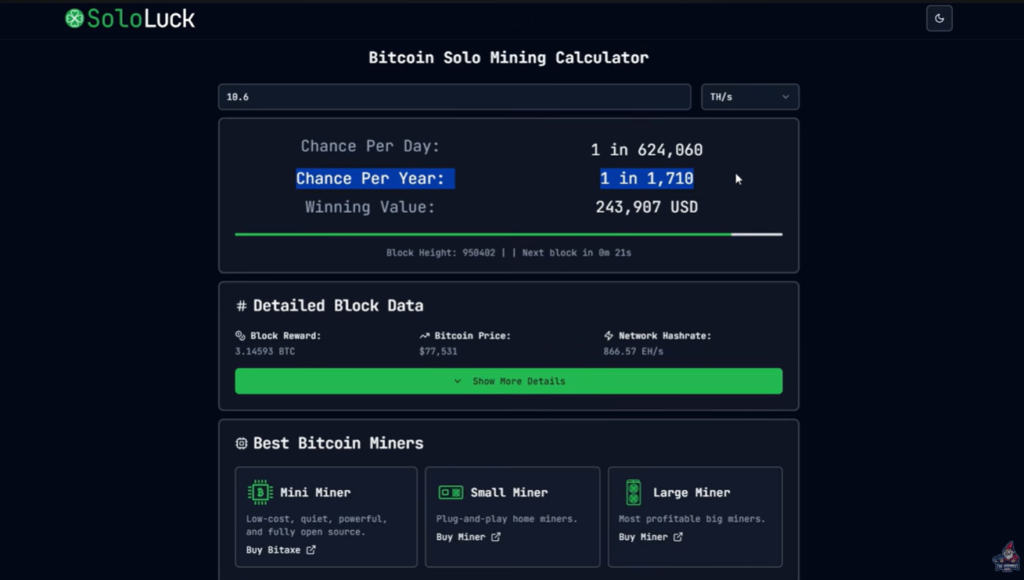
The Nexus S1 is built for solo mining, which means understanding the probability math before choosing which coin to point it at is worth doing.
At 10.6 TH/s on Bitcoin, the estimated odds of finding a block in a given year are approximately 1 in 1,710. A Bitcoin block reward at current prices represents a significant windfall, but the odds reflect just how competitive the Bitcoin network has become.
On Bitcoin Cash, the network difficulty is substantially lower. At 10.6 TH/s , estimated annual odds of finding a BCH block come in at roughly 1 in 8, a dramatically more frequent expectation, though the reward value is lower (approximately $1,100–$1,500 per block at current prices).
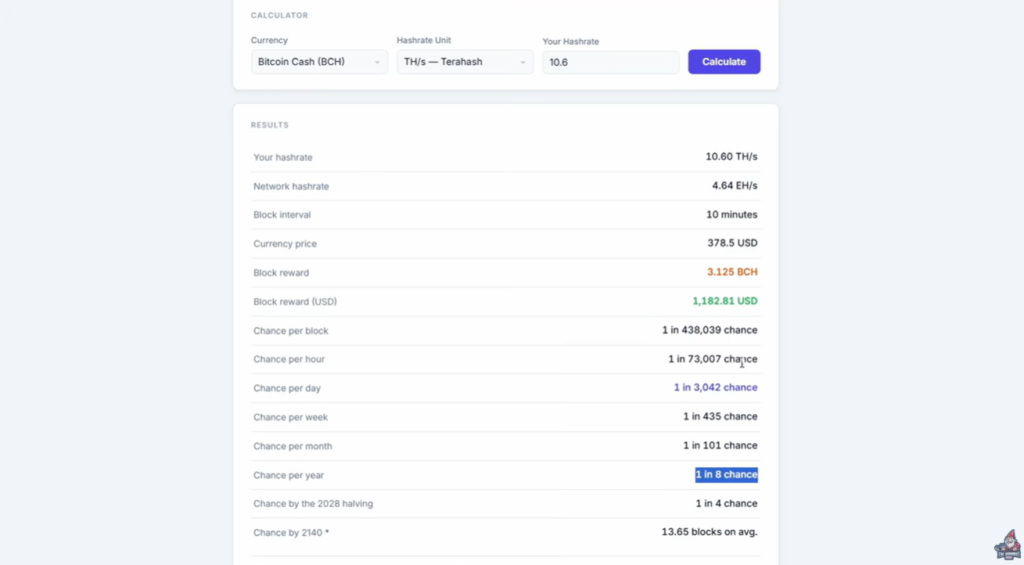
The tradeoff is classic solo mining math: lower probability, higher reward on Bitcoin versus higher probability, lower reward on Bitcoin Cash. Which direction makes sense depends on your risk tolerance and how you think about the value of each asset going forward.
Pricing and Availability
The Nexus S1 is available through Helium Deploy at $699, with availability in batches. If you do decide to buy, use checkout code “NEXUS” for a discount!
Final Thoughts
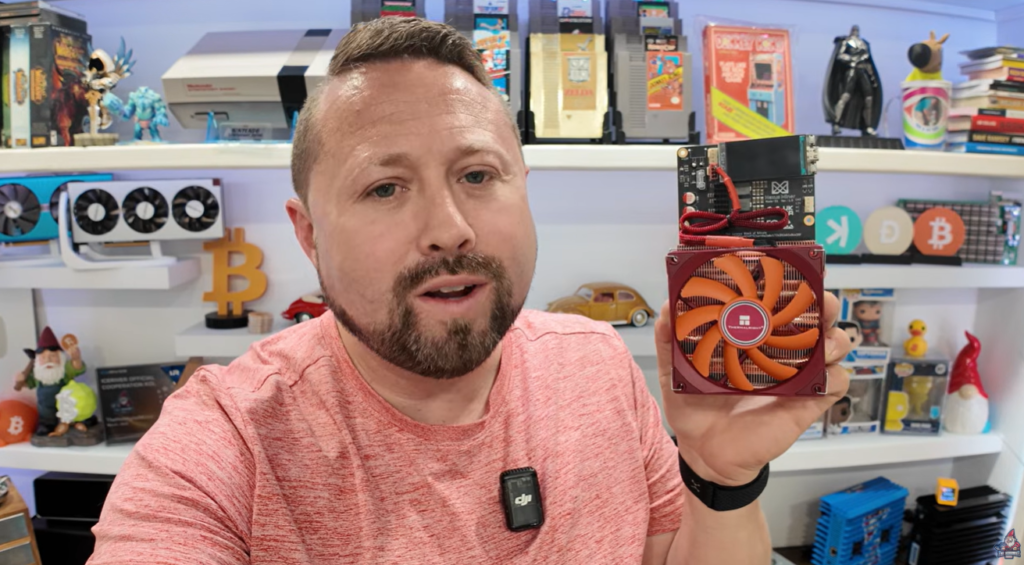
The Nexus S1 is the most capable home solo Bitcoin miner available in its category right now, and it’s not particularly close. Four BM1373 chips, 10+ TH/s, 55 decibels at full fan speed, and a thermal profile that stays manageable, that combination doesn’t exist in any other home friendly device on the market today.
The power draw running 40% above spec is a real gap between marketing and reality, and the prototype hardware used in this review had some rough edges that the production model should address. But the fundamental performance is there, and the BM1373 chip gives the Nexus S1 a meaningful efficiency advantage over everything else in the solo miner space.
At $699 — or $674 with the discount applied, it’s not an impulse purchase. But for a solo miner chasing Bitcoin or Bitcoin Cash blocks with the most capable home hardware currently available, the Nexus S1 makes a compelling case.
See You Next Time!
Thinking about picking up a Nexus S1? Got questions about solo mining Bitcoin vs. Bitcoin Cash? Come join the conversation in The Hobbyist Miner Community Discord — free to join here!